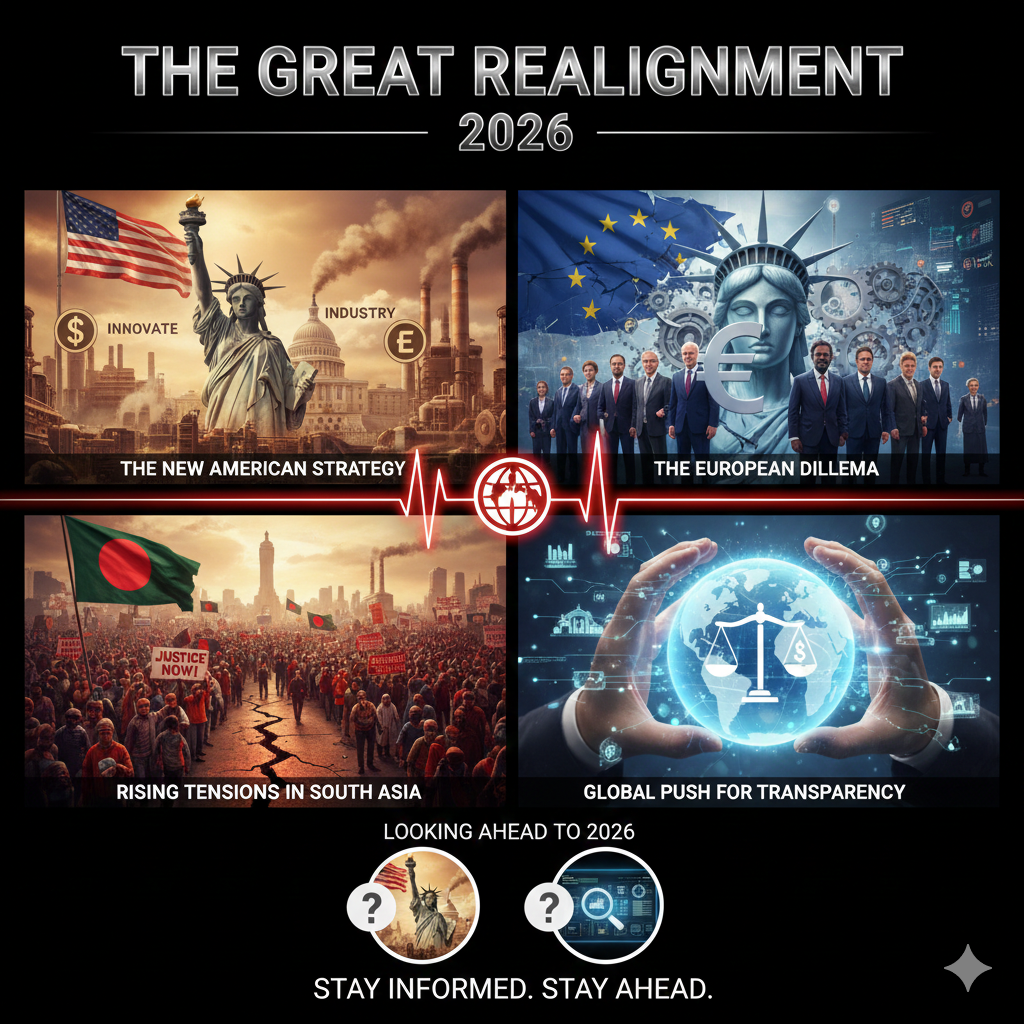
The Great Realignment: How 2026 is Rewriting the Global Political Playbook. As the final weeks of 2025 unfold, the world finds itself at a massive crossroads. The political landscape is no longer defined by the old rules of diplomacy or predictable trade cycles. Instead, we are entering an era of radical transparency, nationalistic economic shifts, and a complete overhaul of how superpowers interact with one another. If 2025 was the year of setting the stage, 2026 is shaping up to be the year of the Great Realignment.The New American Strategy and the European DilemmaThe most significant political development this month is the formal unveiling of the updated United States National Security Strategy. This document signals a definitive end to the era of global policing. The administration has made it clear that American resources will now be prioritized for domestic reindustrialization and border security rather than maintaining expensive overseas commitments.For Europe, this is a moment of truth. For decades, the European Union has relied on the American security umbrella. Now, with the U.S. demanding a massive increase in defense spending from its NATO allies, Brussels is forced to choose between fiscal austerity and military independence. We are already seeing the first signs of a European defense union forming, which could lead to a more fragmented but self-reliant Western alliance.Rising Tensions and Democratic Fragility in South AsiaWhile the West grapples with structural changes, South Asia is facing a crisis of stability. The ongoing unrest in Bangladesh has captured global attention. What began as student protests has evolved into a complex struggle for the soul of the nation. The interim government is under immense pressure to deliver a clear timeline for elections while simultaneously managing a fractured economy and rising social polarization.The implications here are regional. India, as the dominant neighbor, is navigating a delicate diplomatic path. The fear is that prolonged instability could create a power vacuum, drawing in external influences and disrupting the critical shipping lanes of the Bay of Bengal. This situation serves as a stark reminder that democracy is often at its most vulnerable during periods of transition.The Global Push for Health Equity and Financial TransparencyDespite these geopolitical frictions, there is a surprising amount of progress being made in the realm of global governance. At a recent United Nations summit, a landmark declaration was passed regarding noncommunicable diseases and mental health. This represents a rare moment of global unity, as nations from every continent agreed to set specific targets for reducing tobacco use and expanding access to psychological care.Parallel to this, a new movement for political finance transparency is gaining momentum. Led by a coalition of mid-sized powers, this initiative aims to standardize how political donations are tracked globally. The goal is to reduce the influence of dark money in elections, which many leaders now identify as the primary threat to public trust in government.Looking Ahead to 2026As we move into the new year, the focus will shift from high-level policy to grassroots impact. We will see if the new U.S. tariffs actually bring manufacturing back or simply drive up costs for consumers. We will see if Europe can truly stand on its own two feet. And most importantly, we will see if international institutions have the strength to hold together a world that feels increasingly pulled apart.The political news of today is no longer just about who wins an election. It is about the fundamental restructuring of how we live, work, and protect our communities. In this fast-changing environment, staying informed is the only way to navigate the uncertainty of what comes next.
1. The Death of Laissez-Faire: The Rise of State Interventionism
The most visible change in 2026 is the end of the “hands-off” government approach. In what experts call New Economic Nationalism, governments have transitioned from being referees to being the star players.
- Industrial Subsidies: Major powers are pouring billions into domestic manufacturing to secure supply chains.
- Economic Security first: Trade is no longer just about profit; it’s about “de-risking” from geopolitical rivals.
- Fragmented Markets: Instead of one global market, we see “spheres of engagement” where trade is dictated by political alignment rather than just price.
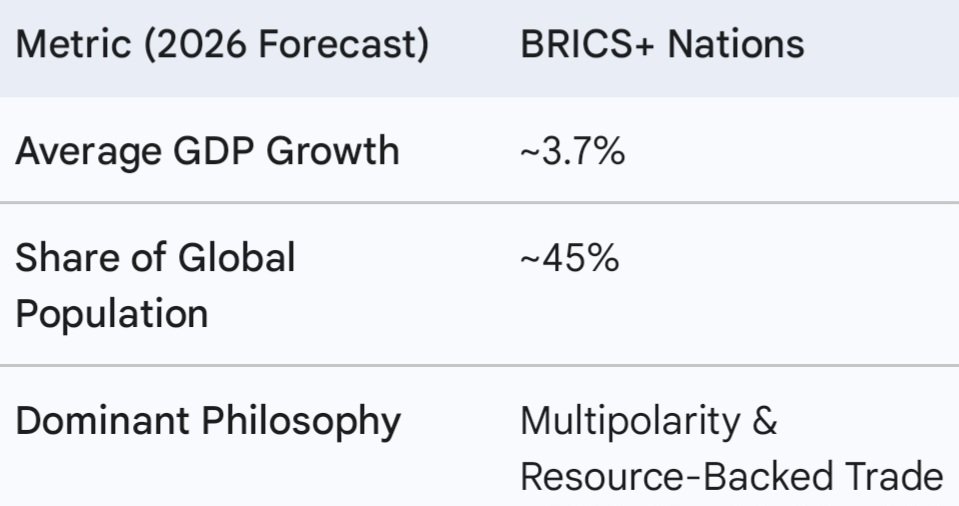
BRICS+ vs. G7: The Economic Seesaw
In a historic milestone, 2026 is the year the BRICS+ group’s share of global merchandise exports is projected to overtake the G7.
2. Sovereign AI: The New Frontier of National Security
In 2026, Artificial Intelligence has moved beyond a “tech trend” to become a pillar of national sovereignty. We are no longer just talking about chatbots; we are talking about Sovereign AI stacks.
Countries are racing to build their own AI infrastructure to avoid “digital colonialism.” This has led to:
- Techno-Nationalism: Export controls on high-end semiconductors (like those from NVIDIA) have become the modern-day equivalent of oil embargoes.
- AI Poisoning & Information Warfare: AI is being used to automate propaganda, making “truth” a scarce commodity in the 2026 political landscape.
- The Governance Split: While the EU pushes for human-rights-centric AI regulation, other blocs prioritize rapid deployment and military integration.
3. Transactional Diplomacy: Alliances are Now “Deals”
The era of “steadfast” alliances is fading. Led by a more transactional approach from Washington and mirrored by regional powers, 2026 is the year of the Geopolitical Pivot.
- Alliances as Transactions: Security commitments are increasingly viewed as negotiable contracts rather than permanent vows.
- Middle Power Boldness: Countries like India, Türkiye, and Brazil are acting as “swing states,” leveraging their position to extract the best deals from both the West and the East.
- Regional Rearmament: With a “fragmented security umbrella,” nations in Europe and Asia are accelerating their own defense spending, no longer fully trusting external guarantees.
”In 2026, global business and politics must account for volatility not as a bug, but as a constant feature of the system.” — Geostrategy Outlook 2026
4. The Geopolitics of Scarcity: Water, Minerals, and Energy
Climate change and resource depletion have rewritten the map of 2026. Political stability is now inextricably linked to Resource Resilience.
- Water Scarcity: Access to fresh water is becoming a flashpoint for conflict, particularly in regions where cross-border rivers are being dammed for national energy security.
- Critical Mineral Alliances: The “Lithium Cartels” and “Cobalt Coalitions” are the new OPEC, as the world struggles to fuel the green energy transition.
- Climate Implementation: As 2026 temperatures hit record highs, the focus at COP 31 (Antalya, Türkiye) has shifted from “pledges” to “hard finance” for the Global South.
Conclusion: Adapting to the New Reality
The “Great Realignment” of 2026 teaches us that the old rules of global cooperation are being replaced by a more competitive, fragmented, and tech-driven reality. For businesses and leaders, the goal is no longer just “efficiency”—it is resilience.