
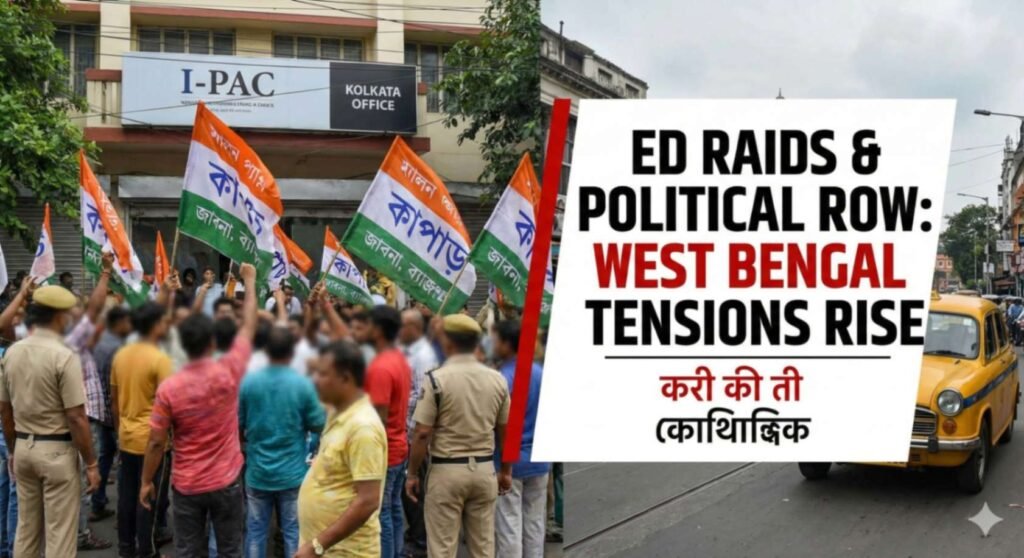
The political landscape of West Bengal has erupted into a fresh tempest following recent enforcement actions against the Indian Political Action Committee, widely known as I-PAC. This consultancy group, originally founded by celebrated strategist Prashant Kishor, finds itself at the epicenter of a fierce tug of war between the ruling Trinamool Congress and the central administration. What began as a procedural search by the Enforcement Directorate has spiraled into a full blown constitutional standoff, raising questions about agency overreach, political vendetta, and the sanctity of electoral strategies.Tensions reached a fever pitch when federal investigators arrived at the Kolkata offices of the consultancy firm and the residence of its executives. The situation took a dramatic turn as the Chief Minister herself arrived at the scene, an unprecedented move that signals just how critical this agency is to the ruling party’s machinery. Her intervention, characterized by allegations that sensitive election data was being seized under the guise of financial investigation, has drawn battle lines sharper than ever before. The ruling party argues that these searches are a calculated attempt to hamstring their campaign preparations for the upcoming assembly elections, while opposition leaders maintain that the law must take its course regardless of political affiliations.The controversy has also reignited debates surrounding Prashant Kishor, the original architect of the firm. Although he has officially distanced himself from the organization to pursue his own political journey, his name remains inextricably linked to the brand. Detractors are using this opportunity to demand a wider probe into the operational finances of the consultancy, alleging deep rooted irregularities. Meanwhile, supporters view the entire episode as a intimidation tactic designed to rattle the strategic backbone of the state government. The timing is particularly sensitive, as every move is now viewed through the lens of the looming electoral contest.As accusations fly and legal notices are exchanged, the streets of Kolkata have witnessed protests and counter protests. The central agency claims obstruction of duty, while state officials cry foul over what they term an invasion of privacy and democratic rights. This latest chapter in West Bengal politics serves as a stark reminder that the battle for power is fought not just on the ballot, but through a complex web of narratives, investigations, and high voltage perception wars. With neither side willing to blink, this confrontation promises to shape the political discourse of the region for months to come.

