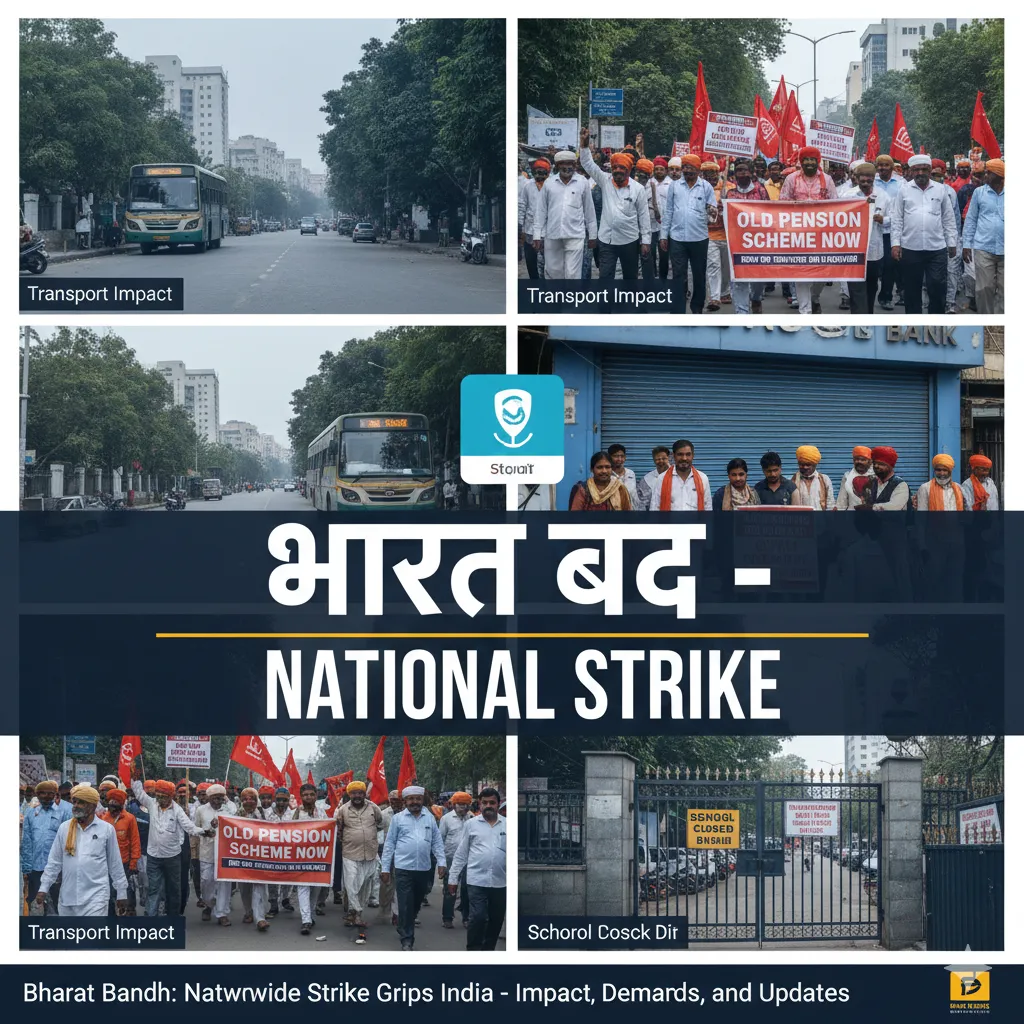
India is witnessing one of the largest coordinated industrial actions in recent history. A Bharat Bandh (National Strike) has been called by a powerful coalition of over 10 central trade unions and numerous farmers’ organizations, bringing several sectors to a grinding halt. With an estimated 30 crore workers participating, the strike serves as a significant flashpoint between the workforce and the government’s current economic policies.
In this blog, we break down why this strike is happening, which services are affected, and what the protesters are demanding.
Why is Bharat Bandh Happening? Key Demands
The current nationwide strike isn’t a spontaneous protest but the result of long-standing grievances. The coalition, including major bodies like the AIBEA (All India Bank Employees’ Association) and BEFI, has outlined a clear charter of demands.
1. Opposition to New Labour Codes
The primary bone of contention is the implementation of new labour codes. Protesters argue that these codes dilute workers’ rights, make hiring and firing easier for corporations, and weaken the bargaining power of trade unions.
2. Restoration of the Old Pension Scheme (OPS)
Government employees across various states are demanding the scrap of the National Pension System (NPS) in favor of the Old Pension Scheme. The OPS is viewed as more secure because it provides a fixed monthly income post-retirement without being tied to market fluctuations.
3. MGNREGA Funding and Rural Support
Farmers’ organizations have joined the Bharat Bandh to highlight the shrinking budget for MGNREGA (Mahatma Gandhi National Rural Employment Guarantee Act). They are demanding increased funding to ensure 100 days of guaranteed work for rural households and better Minimum Support Prices (MSP) for crops.
4. Trade Deal Concerns
There is significant pushback against specific clauses in the India-US trade deal negotiations. Unions fear that certain agreements might hurt domestic small-scale industries and lead to the privatization of essential public sectors.
The Scale of Participation
This isn’t just a localized protest. Over 30 crore workers from organized and unorganized sectors—including steel, oil, mines, defense, and IT—are expected to stay away from work. This massive turnout is designed to send a clear message to the administration regarding the “pro-corporate” direction of recent legislation.
Status of Services: What is Open and What is Closed?
If you are planning to travel or conduct financial transactions today, here is a breakdown of the expected impact across the country:
Banking Services
The banking sector is expected to face the most significant disruption. Major unions like the AIBEA and BEFI have officially joined the strike.
- What to expect: Counter services, cheque clearing, and loan processing will likely be stalled.
- What is working: Digital banking, UPI, and most ATMs are expected to remain functional, though cash replenishment may be delayed.
Transport and Logistics
The impact on transport varies significantly by region.
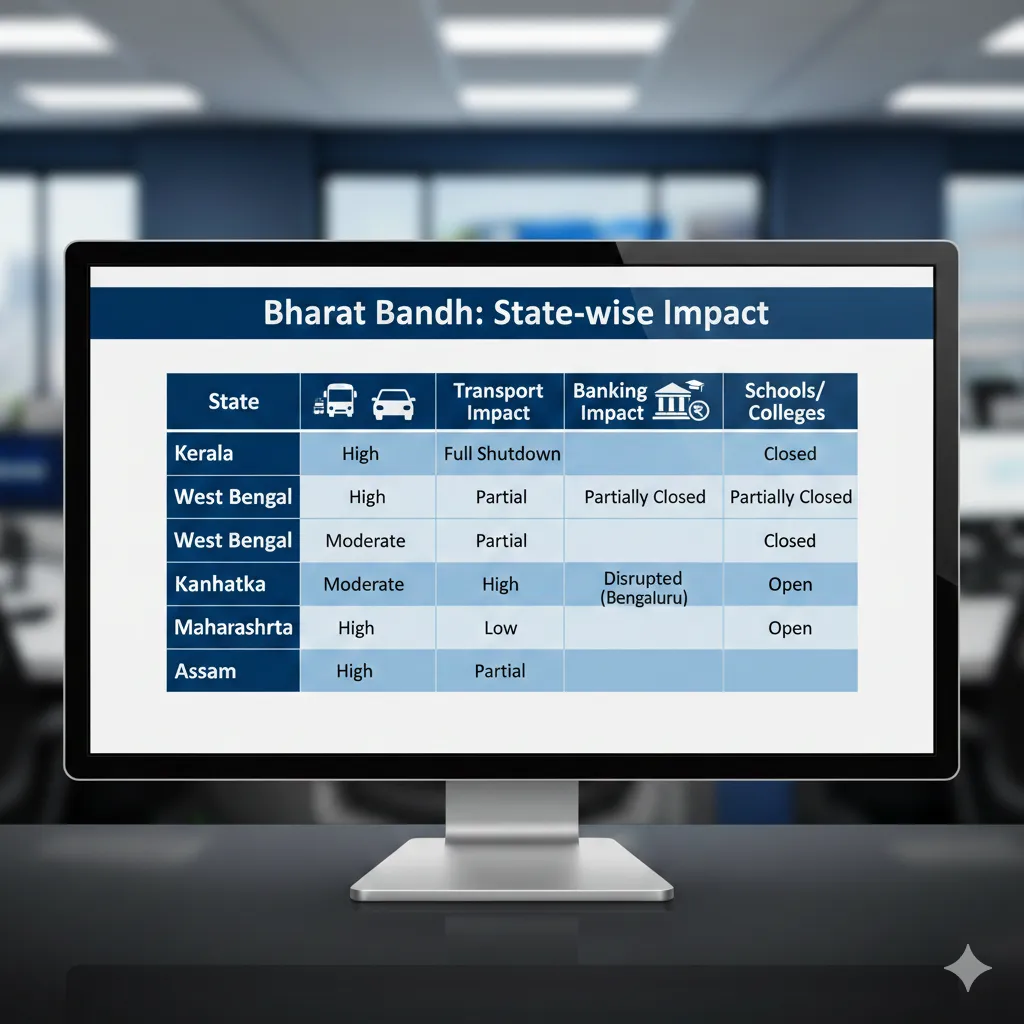
- High Impact States: Kerala, Odisha, Assam, and Karnataka are seeing a partial to near-total shutdown of public transport.
- Buses and Taxis: In major hubs like Bengaluru and Kolkata, many private bus operators and taxi unions have stayed off the roads in solidarity or due to safety concerns.
- Railways: While trains are running, “Rail Roko” (blockades) in certain pockets of West Bengal and Bihar may cause delays.
Schools and Educational Institutions
While most state governments have not declared an official holiday, the reality on the ground is different.
- Bengaluru & Kolkata: Many private schools have shifted to online classes or declared a holiday due to the lack of reliable transport for students and staff.
- Kerala: Schools and colleges are largely closed as the state sees a near-total shutdown.
State-wise Impact Table
The Economic Implications
A strike of this magnitude carries a heavy economic price tag. When 30 crore people stop production, it impacts the GDP and disrupts the supply chain for essential goods. However, the unions argue that the long-term “cost of silence” against the new labour codes would be far more damaging to the Indian middle and lower-class workforce than a one-day production loss.
”This Bharat Bandh is not just about a day’s wages; it’s about the future of labor dignity and social security in India.” — Representative of a participating Trade Union.
Conclusion: What Lies Ahead?
The Bharat Bandh serves as a massive “temperature check” for the government. Whether the administration will invite union leaders for fresh talks or continue with the implementation of the disputed codes remains to be seen. For the common citizen, staying updated via local news and opting for digital transactions is the best way to navigate the day.