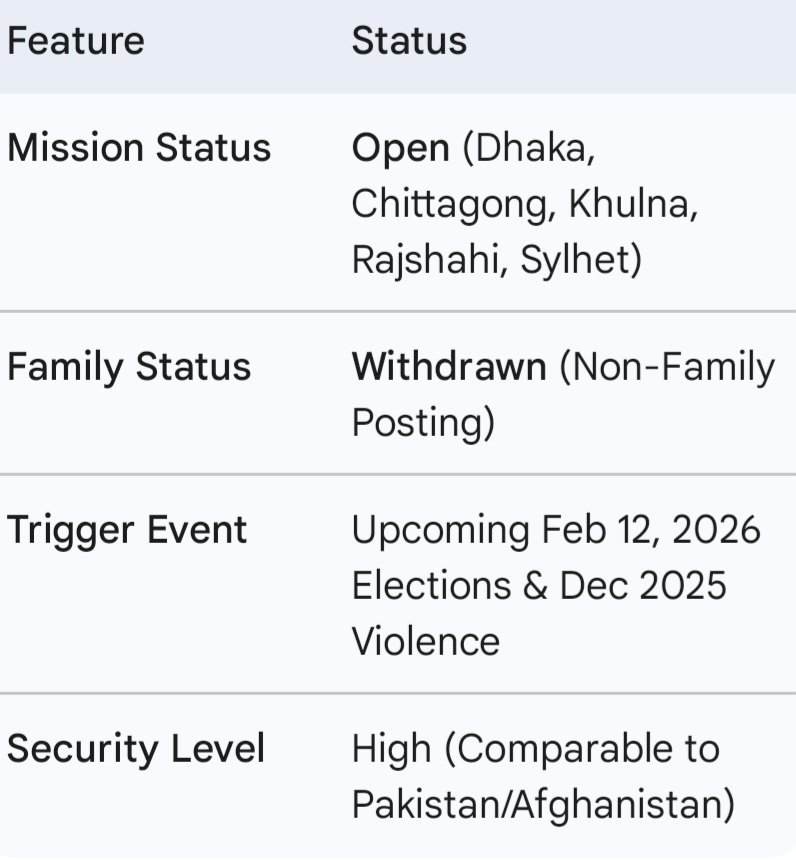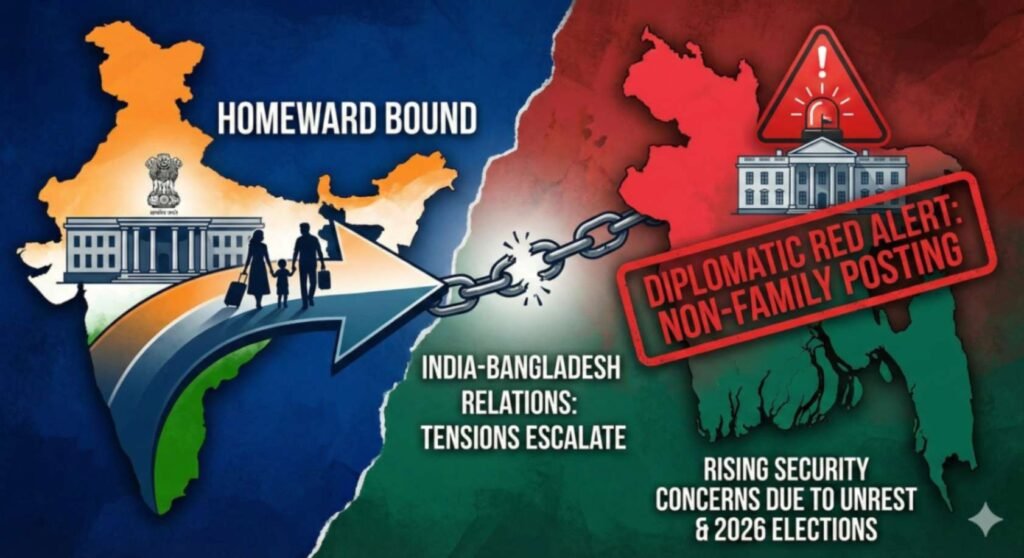
Why India Has Declared Bangladesh a ‘Non-Family’ Posting Ahead of 2026 Elections. In a move that signals a deepening fracture in South Asian diplomatic ties, India has officially advised the families of its diplomats in Bangladesh to return home immediately. As of today, January 21, 2026, New Delhi has designated its diplomatic missions in Bangladesh as “non-family postings,” a classification previously reserved for high-risk zones like Afghanistan and Pakistan.
This decision is not just administrative; it is a stark geopolitical signal. With Bangladesh’s parliamentary elections just weeks away on February 12, 2026, tensions have reached a boiling point.
Here is a breakdown of what this means for India-Bangladesh relations and why this decision was taken now.
What Does “Non-Family Posting” Mean?
In diplomatic terms, this is a severe precautionary measure.
- The Order: Indian diplomats posted in Dhaka, Chittagong, Khulna, Rajshahi, and Sylhet must now serve without their spouses or children.
- The Evacuation: Dependents currently residing in Bangladesh have been asked to return to India voluntarily but with immediate effect.
- Operational Status: Crucially, the missions remain fully operational. The High Commission and Assistant High Commissions are not closing; India is maintaining its diplomatic presence, but stripping it down to essential personnel only for safety.
- December 2025 Protests: Just last month, violent protests erupted outside the Indian Assistant High Commission in Chittagong, forcing a temporary suspension of visa services.
- Radical Threats: The killing of radical leaders and subsequent blame games have led to mobs besieging diplomatic enclaves.
- Trust Deficit: The withdrawal indicates that New Delhi does not trust the current Dhaka administration’s ability—or willingness—to guarantee the safety of Indian families.
- Visa & Trade Impact: While missions remain open, the psychological impact of this downgrade could slow down consular services. For the thousands of Bangladeshi citizens seeking medical and student visas for India, delays may become the new normal as security protocols tighten.
- Regional Security: India is signaling that it is prepared for a “worst-case scenario” post-election, securing its people before the ballot boxes even open.
What Happens Next?
For now, the Indian High Commission operates in a fortress mode. All eyes are on the February 12 elections. The outcome of these polls will determine whether this “non-family” status is a temporary security dip or a permanent scar on the face of India-Bangladesh diplomacy.
As the situation develops, the message from New Delhi is clear: Safety first, diplomacy second.