
The political landscape in West Bengal is heating up, but this time, the friction isn’t just between rival parties. The Election Commission of India (ECI) has officially rejected the West Bengal government’s plea to exempt 25 high-ranking IAS and IPS officers from election duty. This event marks a significant point in the ongoing saga, as the EC rejects state exemption requests.
This move reinforces the ECI’s absolute authority during the election cycle and sets the stage for a high-stakes administrative shuffle in the state.
The Core of the Conflict: State Request vs. ECI Mandate
The West Bengal government recently reached out to the Election Commission with a specific request: allow 25 senior bureaucrats and police officers to remain in their state roles. The justification provided by the state revolved around “administrative exigencies”—essentially arguing that these officers are too vital to the state’s daily governance to be sent elsewhere.
In summary, the latest decision by the Election Commission, also referred to as the EC Rejects State Exemption, underscores the importance of maintaining a fair electoral process.
However, the ECI remained unmoved. In a direct directive, the Commission ordered all 25 officers, including the Home Secretary, to report to New Delhi for briefings.
Why the ECI Rejected the Plea
The ECI’s primary mandate is to ensure a “level playing field” and conduct free and fair elections. Historically, the Commission views the mobilization of officers as a way to:
- Ensure neutrality by placing officers in states other than their home cadre.
- Prevent local political influence over administrative machinery.
- Standardize election management across all polling zones.
High-Profile Officers Under the Lens
Among the 25 officers, the inclusion of the Home Secretary is particularly significant. The Home Secretary handles the state’s internal security and police administration—roles that are critical during the volatile election periods West Bengal is known for.
The ECI has designated these officers to serve as General and Police Observers. Their task? To act as the eyes and ears of the Commission in different parts of the country, ensuring that the Model Code of Conduct (MCC) is strictly followed.
The Legal and Constitutional Framework
To understand why the state government has little room to maneuver, we have to look at the Representation of the People Act, 1951.
Article 324 and the Power of Deputation
Under Article 324 of the Indian Constitution, the ECI has the power of “superintendence, direction, and control” of elections. Once an election is announced, the administrative staff designated for election work are technically on deputation to the Commission.
”During the election period, the officers are under the disciplinary control of the Election Commission, not the state government.”
This means that refusing to release officers can be viewed as a constitutional deadlock, often resulting in strict penalties or the ECI using its powers to remove officials they deem “biased” or “uncooperative.”
Impact on West Bengal’s Administration
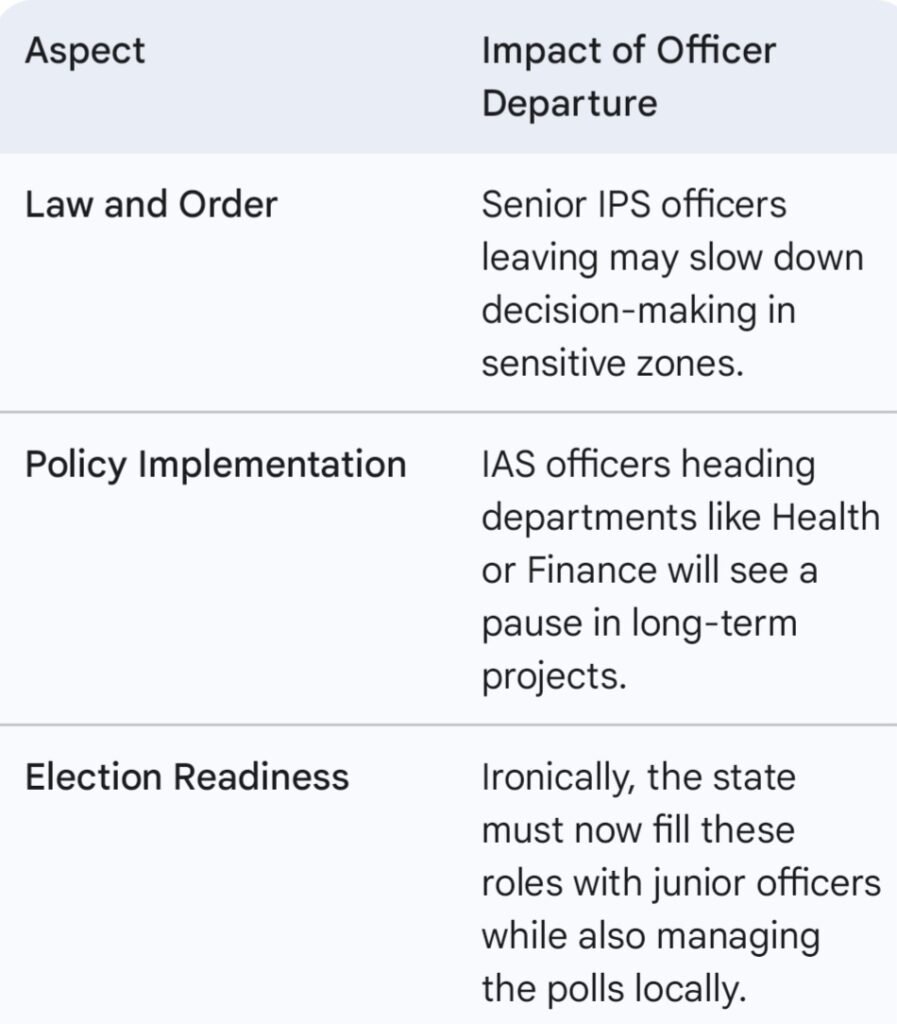
The sudden departure of 25 top-tier officers creates a significant vaccum in the state secretariat.
Historical Context: West Bengal and the ECI
This isn’t the first time the ECI and the West Bengal government have locked horns. From the removal of Police Commissioners to the shuffling of District Magistrates, the ECI has frequently exercised its muscle in the state to address concerns of poll violence and administrative bias.
By rejecting the exemption, the ECI is sending a clear message: The national electoral process takes precedence over state-level administrative convenience.
Expert Analysis: What Happens Next?
The 25 officers are now required to attend briefings in New Delhi. These briefings cover:
- Vulnerability Mapping: Identifying areas prone to intimidation.
- Deployment of Central Forces: Coordinating between state police and CAPF.
- MCC Enforcement: Handling complaints regarding hate speech or illegal inducements.
If the West Bengal government fails to comply, the ECI can invoke Section 13CC of the Representation of the People Act, which treats these officers as being on “extra-territorial” duty, making any defiance a punishable offense under service rules.
Conclusion: A Test of Administrative Resilience
The rejection of the state’s exemption request highlights the inherent tension in India’s federal structure during election years. While the West Bengal government argues for the necessity of its officers for “public interest,” the ECI maintains that the sanctity of the ballot is the highest form of public interest.
As these 25 officers head to New Delhi, the focus shifts to how the state will manage its internal affairs with a “lean” team during one of the most critical periods in its political calendar.
Key Takeaways
- ECI Authority: Confirms that state governments cannot veto the selection of observers.
- Officer Roles: Senior IAS/IPS officers will act as Observers in other states.
- Governance Gap: West Bengal faces a temporary administrative shortage.