The Viral Spark That Ignited a Global Debate on Tech Workspaces
Google Bengaluru vs NYC. A fascinating new conversation has taken the internet by storm, driven by a viral video that offers a rare, inside look at the contrasting worlds of two major technology hubs. Diksha Aggarwal, a Google employee, recently shared her personal experiences working in both the Bengaluru and New York City offices, sparking a massive debate among professionals worldwide. Her visual narrative goes beyond simple office aesthetics to touch upon the very soul of corporate culture in different hemispheres. For digital nomads, tech enthusiasts, and corporate leaders, this comparison serves as a perfect case study on how geography influences productivity and professional interaction. The video has resonated deeply because it highlights a universal truth: while the company logo might remain the same, the human experience of work changes drastically depending on whether you are navigating the chaotic warmth of India or the structured intensity of the United States.
Energetic Buzz Versus Focused Individualism: A Tale of Two Cities
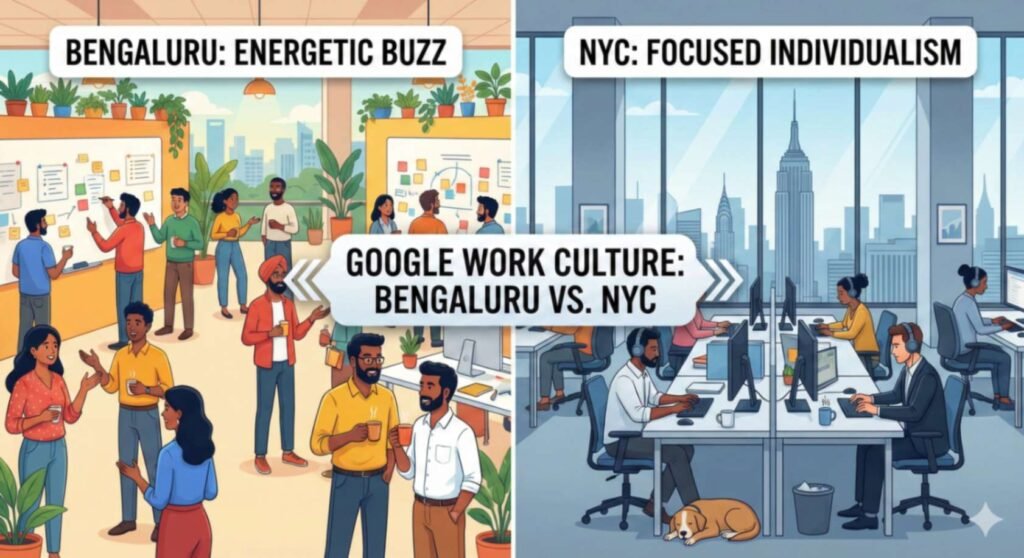
The core of this viral discussion centers on the distinct psychological atmospheres of the two locations. The Bengaluru office is described as a hive of “energetic buzz,” a place where collaboration is loud, visible, and constant. In the Indian tech capital, the workspace feels like a vibrant community where teams frequently huddle, discuss ideas in real-time, and feed off a collective energy. This “desi vibe” suggests that productivity in India is often a social activity, driven by interpersonal connection and shared enthusiasm.
In sharp contrast, the New York City office is portrayed through a lens of “focused individualism.” Here, the atmosphere is quieter, more solitary, and deeply intense. Professionals in the NYC office are seen engaging in deep, independent work, creating a culture that values autonomy and uninterrupted focus. While the Bengaluru team might thrive on the noise of collaboration, their American counterparts appear to find their rhythm in the silence of individual dedication. This distinction has sparked a broader conversation about which style is more effective, with many viewers realizing that there is no single right answer, only different paths to the same goal of innovation.
Dogs, Drinks, and Cultural Nuances in Office Policy
Beyond the intangible vibes, the video sheds light on specific policy differences that vividly illustrate the cultural gap. One of the most talked-about revelations is the presence of dogs and alcohol in the New York office. In the US, allowing pets at work and having on-site alcohol for social hours is seen as a way to blend lifestyle with career, fostering a relaxed and modern corporate identity. These amenities, however, are notably absent in the Bengaluru office due to local cultural norms and regulatory frameworks.
This section of the comparison serves as a fascinating reminder of how multinational giants must adapt their perks to fit local sensibilities. It is not just about rules; it is about respect for the society in which the office resides. While New Yorkers might decompress with a drink and a pet by their side, Bengaluru employees find their relaxation and bonding through different, perhaps more community-centric, avenues. These details paint a picture of a company that is flexible enough to change its “hardware” (policies) while trying to maintain its “software” (values).
The Green Signal: Why the Core Googleyness Remains Unbroken
Despite the stark contrasts in noise levels, pet policies, and social habits, the ultimate takeaway from the viral video is overwhelmingly positive—a true “green signal” for the global tech community. The content creator emphasizes that regardless of the location, the fundamental freedom to think big remains a constant constant. Whether in the bustling corridors of Bengaluru or the sleek high-rises of Manhattan, ideas are taken seriously, and the ambition to innovate is the unifying language.
This perspective offers a reassuring message to aspiring tech workers everywhere: the flavor of the office may change, but the ingredients of success remain the same. It proves that a strong corporate culture is not about identical offices, but about shared values that can survive cross-continental translation. The “green signal” here is the validation that diversity in work styles—whether collaborative or individualistic—is not just accepted but essential for a global powerhouse to function.