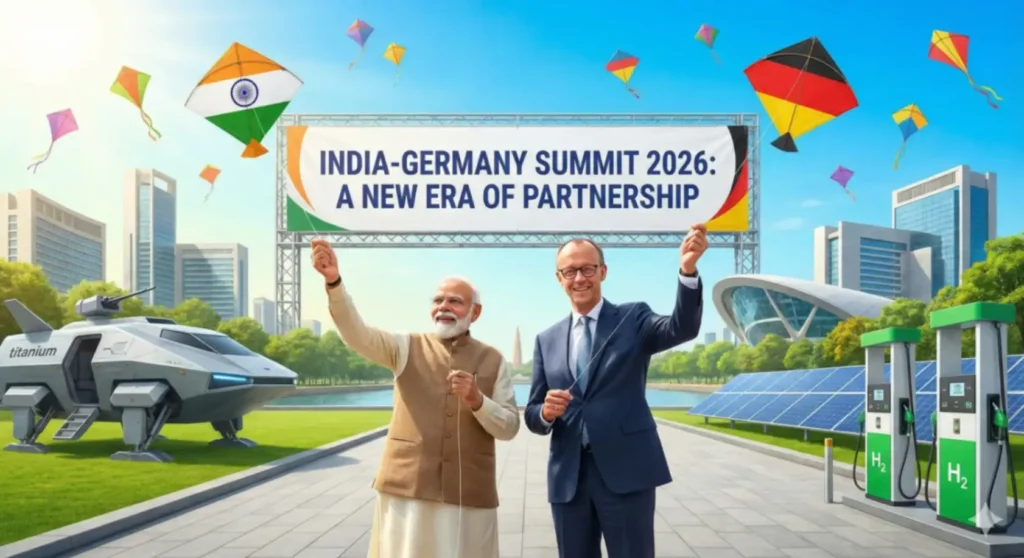
India Germany Summit 2026: A New Era of Travel, Defence, and Green Innovation. The diplomatic relationship between India and Germany reached a historic milestone this January as German Chancellor Friedrich Merz arrived in India for his first official visit. Marking a pivotal moment in the twenty-five-year Strategic Partnership between the two nations, the summit moved beyond ceremonial gestures to deliver concrete outcomes. From the vibrant Kite Festival on the Sabarmati Riverfront in Ahmedabad to intense boardroom discussions in Gandhinagar, Prime Minister Narendra Modi and Chancellor Merz have set a new course that impacts everything from national security to international travel, signalling that the alliance has matured into a deep, strategic bond.One of the most immediate and impactful announcements for Indian citizens is the introduction of a visa-free transit facility. For years, Indian passport holders travelling to destinations like the United States or Canada often faced the bureaucratic hurdle of obtaining a transit visa just to change flights in German hubs. This requirement has now been scrapped, making travel through major airports like Frankfurt and Munich significantly smoother, cheaper, and more accessible. This move not only eases the burden on travellers but also positions Germany as a more attractive transit hub for the massive volume of Indian global traffic.Beyond travel convenience, the summit solidified a “titanium” bond in defence and security. Moving away from a traditional buyer-seller dynamic, the two nations signed a landmark Defence Industrial Cooperation Roadmap that prioritizes co-development and co-production of military hardware. This shift indicates a high level of strategic trust, as Germany looks to reduce reliance on older alliances and bet big on India’s manufacturing capabilities. Simultaneously, the partnership took a massive leap in sustainable technology with Germany committing a fresh €1.24 billion to support green projects in India. This includes a major offtake agreement for Green Ammonia to boost India’s National Green Hydrogen Mission and funding for the PM e-Bus Sewa, reinforcing the shared commitment to combating climate change.The depth of this collaboration was further evidenced by the signing of nineteen diverse Memorandums of Understanding (MoUs) covering sectors from skill development to maritime heritage. These agreements focus on critical areas such as talent mobility, allowing skilled Indian professionals easier access to the German workforce, and joint exploration of critical minerals to secure future supply chains. The summit also paved the way for a new India-Germany Centre of Excellence to foster innovation in AI and climate action. As trade volumes surpass the $50 billion mark, this summit has proven that the India-Germany alliance is no longer just about machinery and engineering, but about building a comprehensive, future-ready partnership that benefits the people of both nations.
1. Travel & Mobility: Visa-Free Transit and Skill Partnerships
One of the most significant “people-first” outcomes of the 2026 summit is the easing of travel restrictions. Germany is positioning itself as the primary gateway for Indians heading to Europe.
- Visa-Free Transit: Germany announced a visa-free transit regime for Indian passport holders transiting through German airports. This move is expected to drastically reduce travel friction for professionals and students.
- Global Skills Partnership: A new framework was established for the fair and ethical recruitment of Indian healthcare professionals and skilled workers, addressing Germany’s labor shortage while providing world-class opportunities for Indians.
- Education Roadmap: India has invited German universities to open campuses in India, further bridging the academic gap between the two nations.
2. Defence and Security: Moving Beyond “Buyer-Seller”
The 2026 summit signaled a shift from traditional arms sales to a Defence Industrial Cooperation Roadmap. Both nations are now focusing on the co-development and co-production of military hardware.
- Strategic Hardware: Discussions reached a fever pitch regarding a landmark $8 billion submarine deal, alongside collaboration on Counter-Unmanned Aerial Systems (C-UAS) and obstacle avoidance systems for helicopters.
- Military Interoperability: Germany confirmed its participation in major Indian-led exercises, including Naval Exercise MILAN (February 2026) and the Air Combat Exercise TARANG SHAKTI (September 2026).
- Reciprocal Logistics: The signing of a Reciprocal Logistics Support Agreement will allow both militaries to use each other’s facilities for repairs and replenishment, strengthening the “Free and Open Indo-Pacific” vision.
3. Green Innovation: The €10 Billion Commitment
Sustainability remains the flagship pillar of the partnership. The Green and Sustainable Development Partnership (GSDP) is now in its “half-time” phase, with massive new funding milestones.
- New Funding: Germany committed an additional €1.24 billion for projects including the PM e-Bus Sewa, renewable energy manufacturing, and climate-resilient urban infrastructure.
- Green Ammonia Deal: A major offtake agreement was signed between India’s AM Green and Germany’s Uniper, facilitating the supply of green ammonia to help decarbonize German industry.
- Centre of Excellence: The establishment of an India-Germany Centre of Excellence in Renewable Energy in Hyderabad will serve as a hub for battery storage technology and wind energy research.
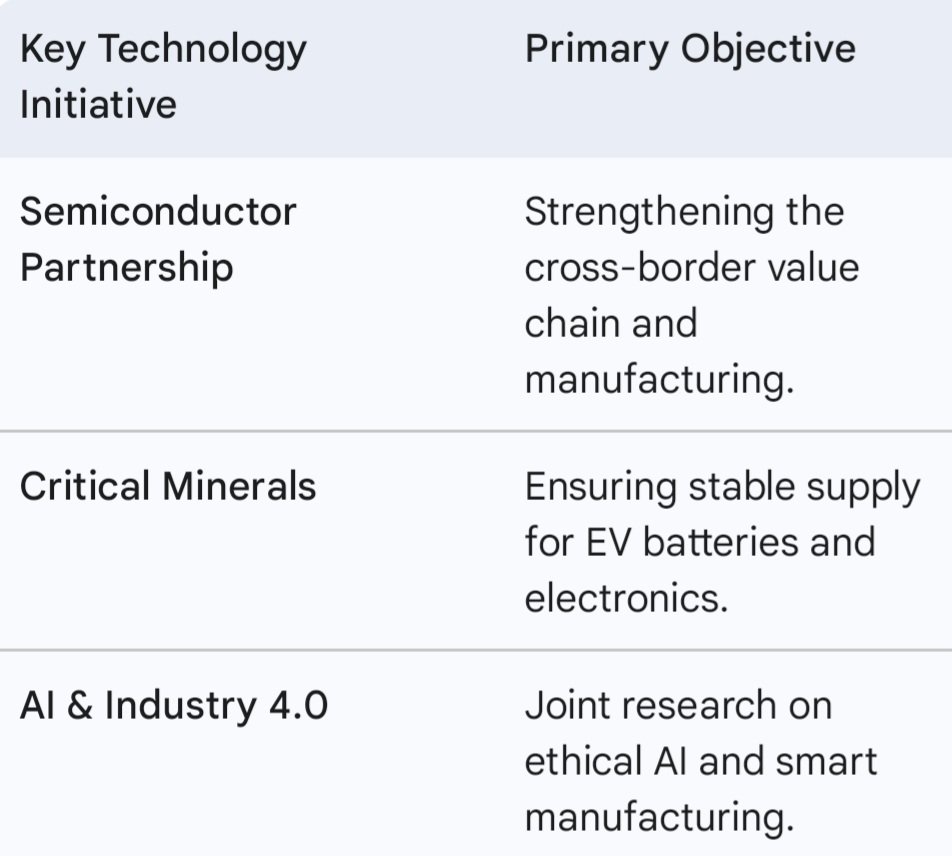
4. Technology & Semiconductors: Securing the Supply Chain
To reduce dependence on volatile global supply chains, the 2026 summit prioritized Critical and Emerging Technologies (CET).
Conclusion: A Future-Ready Alliance
The India-Germany Summit 2026 has moved the needle from “potential” to “performance.” By aligning India’s massive manufacturing scale with Germany’s engineering excellence, the two nations are not just boosting their GDPs—they are co-authoring the future of the Indo-Pacific.