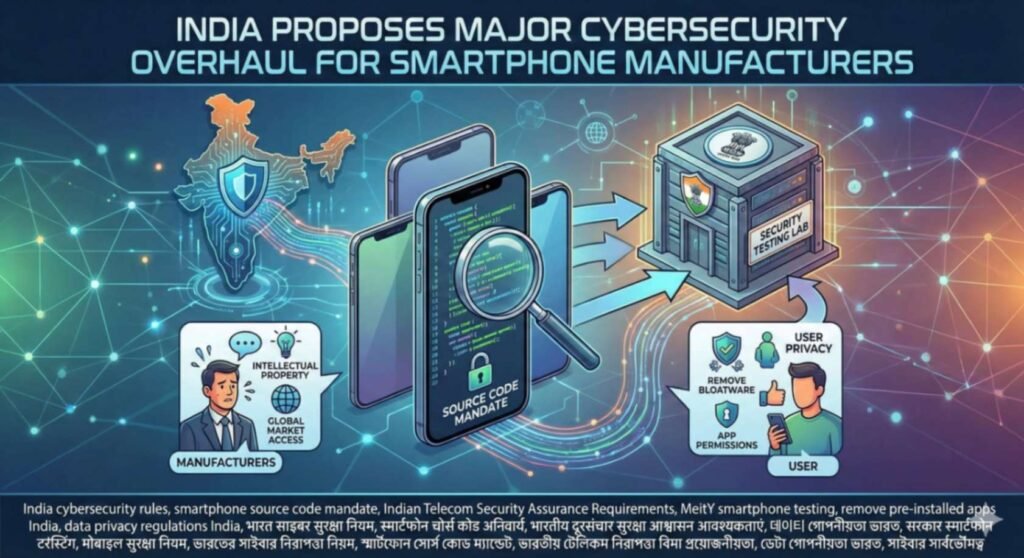
India Proposes Major Cybersecurity. The Indian government is actively considering a transformative regulatory shift aimed at strengthening the national cybersecurity infrastructure, specifically targeting the smartphone industry. This new proposal suggests a mandate for smartphone manufacturers to share their source code with government agencies for security testing. This move is part of a broader initiative known as the Indian Telecom Security Assurance Requirements, designed to ensure that devices used by millions of citizens are free from vulnerabilities and hidden backdoors. The proposal has sparked intense discussions between the Ministry of Electronics and Information Technology and major tech giants, marking a pivotal moment in the balance between national security and corporate proprietary rights.
Understanding the Source Code Mandate
At the heart of this regulatory discussion is the requirement for Original Equipment Manufacturers to disclose their source code—the fundamental set of instructions that operates a device—for testing in government-accredited laboratories. The primary objective is to identify potential security loopholes, malware, or surveillance capabilities that could compromise user data. By analyzing the core software, authorities aim to verify that handsets are secure before they reach the consumer. This level of scrutiny is unprecedented in the global market, as source code is typically considered a closely guarded trade secret by tech companies. The government argues that this step is essential to prevent data breaches and cyber-espionage in an increasingly digitized economy.
Industry Pushback and Privacy Concerns
Leading smartphone manufacturers, including global giants like Apple and Samsung, have expressed significant reservations regarding this proposed framework. Their primary concern revolves around the protection of intellectual property and the potential risks associated with exposing sensitive code to third-party testing. Industry representatives argue that sharing source code could inadvertently expose their proprietary technology to competitors or malicious actors if the testing environments are not rigorously secured. Furthermore, they contend that such a mandate lacks global precedent and could create friction in the ease of doing business in India. There are also concerns that the testing process could delay product launches and increase the cost of compliance, which might eventually be passed down to the consumer.
Impact on Consumer Experience and Safety
Beyond the source code controversy, the proposed rules include several consumer-centric measures that could drastically improve the user experience. The draft regulations suggest that manufacturers must allow users to uninstall pre-installed applications, often referred to as bloatware, which consume storage and battery life. Additionally, the rules propose stricter controls on background app permissions, preventing applications from accessing the camera or microphone without the user’s explicit knowledge. For the average user, these changes could translate to a more secure device with greater control over personal privacy. The government envisions a digital ecosystem where citizens can trust their devices implicitly, knowing that rigorous standards have been applied to protect their sensitive information.
The Path Forward: Consultation and Compliance
It is important to note that these regulations are currently in the consultation phase and have not yet been finalized as law. The government has clarified that it is not looking to forcefully extract trade secrets but rather to establish a collaborative framework for security testing. Recent discussions indicate a willingness to find a middle ground where security concerns are addressed without stifling innovation or compromising intellectual property. As the dialogue continues, the final version of these rules will likely shape the future of the Indian smartphone market, setting new standards for data privacy and device security that could influence global policies. The outcome of these deliberations will determine how the world’s second-largest smartphone market balances the critical need for cyber sovereignty with the demands of a globalized technology sector.