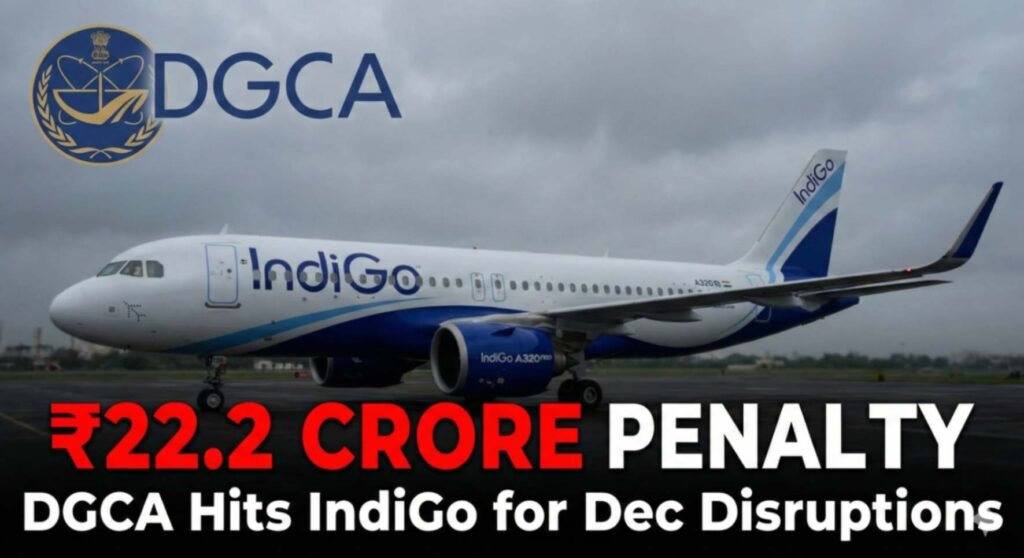
IndiGo Hit with Record ₹22.2 Crore Fine. The Directorate General of Civil Aviation (DGCA) has cracked down on India’s largest airline, imposing a massive ₹22.2 crore penalty on IndiGo following the chaotic flight disruptions that left thousands stranded in December.
If you were one of the lakhs of passengers stuck at airports last month, wondering why your flight was cancelled while the weather looked fine, we finally have the official answer. The aviation regulator has completed its probe, and the findings point to “systemic failures” rather than just fog or bad luck.
Here is a simple breakdown of why IndiGo was fined, what “over-optimisation” means for your safety, and what the airline is doing about it.
The Breakdown: Why the Massive Penalty?
The DGCA didn’t just issue a random fine; they calculated the penalty based on specific violations of civil aviation rules. The total ₹22.2 crore is split into two main parts:
- ₹1.8 Crore (One-time Penalty): This covers specific violations, including failures in operational control and lack of management oversight.
- ₹20.4 Crore (Daily Penalty): This is the heavy hitter. The regulator fined IndiGo ₹30 lakh per day for 68 days (from Dec 5, 2025, to Feb 10, 2026) for continued non-compliance with pilot roster norms.
What Went Wrong? (The “Over-Optimisation” Problem)
The investigation revealed that the chaos in early December—which saw 2,507 cancellations and 1,852 delays—was largely self-inflicted. The DGCA report highlighted a few critical issues:
1. “Aggressive” Efficiency
The report stated IndiGo was guilty of “over-optimisation.” In simple terms, the airline scheduled its planes and crew so tightly to maximize profit that they left zero “wiggle room.” When one small thing went wrong, it triggered a domino effect that the system couldn’t recover from.
2. Pilot Fatigue Risks
A major sticking point was the Flight Duty Time Limitation (FDTL) norms. These are rules designed to ensure pilots get enough rest. The probe found IndiGo failed to implement these revised safety norms effectively, leading to rostering issues that left them without enough eligible pilots to fly the planes.
3. Software Failures
The airline’s planning software and management structures were found to be deficient, unable to handle the complex reality of winter schedules and fog delays.
How Did IndiGo Respond?
Following the order, IndiGo’s parent company, InterGlobe Aviation, released a statement acknowledging the penalty.
- Acceptance: The airline stated they are “committed to taking full cognizance of the orders.”
- Action Plan: They claimed an in-depth review of their internal processes is already underway to make their operations more robust.
- Leadership Impact: The fallout has reached the top. The DGCA issued warnings to the CEO and other top executives, and notably, directed the removal of the Senior Vice President of the Operational Control Centre from his current role.
What This Means for You (The Passenger)
This ruling is a significant win for passenger rights in India. It sends a strong message to all airlines that operational efficiency cannot come at the cost of reliability or passenger comfort.
Moving forward, passengers can hope for:
- More Realistic Schedules: Airlines may now be forced to keep “backup” crew and aircraft available.
- Fewer Last-Minute Cancellations: With better roster planning, the “operational reasons” excuse should become less frequent.
- Better Safety Standards: Strict adherence to pilot rest norms ensures your pilots are alert and well-rested.