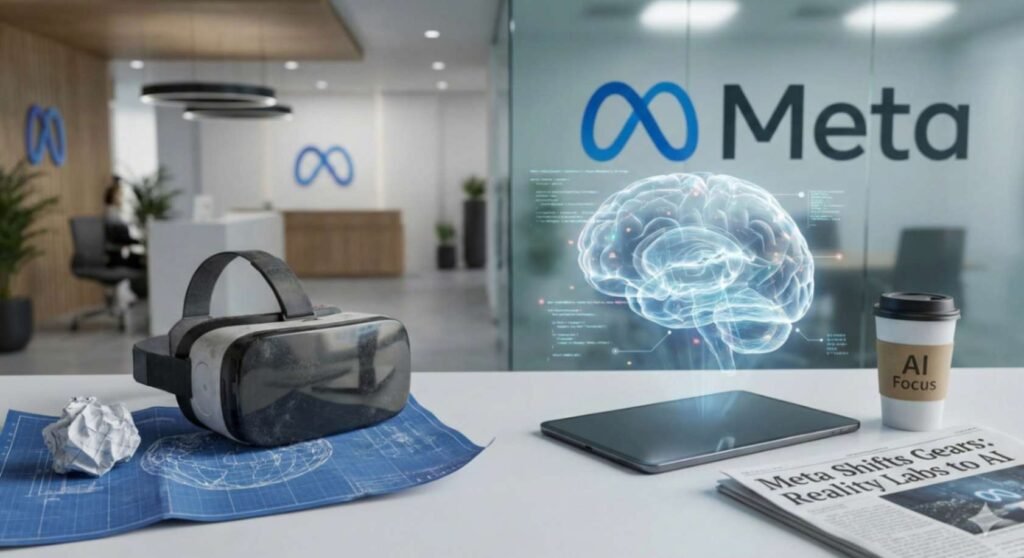
Meta Shifts Focus. Meta, the parent company of Facebook and Instagram, is initiating a fresh round of layoffs within its Reality Labs division. Discover why the tech giant is pivoting from the metaverse to artificial intelligence and what this means for the future of tech.
The End of an Era for the Metaverse?
The tech landscape is shifting once again as Meta, the parent company behind Facebook and Instagram, prepares for another significant round of workforce reductions. Reports indicate that the social media giant is planning to cut a substantial number of roles from its Reality Labs division, the unit responsible for virtual reality and the ambitious metaverse project. This latest move signals a major strategic pivot for the company, moving away from the immersive digital worlds that CEO Mark Zuckerberg once bet everything on, towards the booming field of artificial intelligence.
Why Reality Labs is Facing Cuts
For years, Reality Labs has been the centerpiece of Meta’s long-term vision, burning through billions of dollars to build hardware like VR headsets and the Horizon Worlds platform. However, the division has struggled to turn a profit, accumulating massive financial losses quarter after quarter. Investors have long expressed concern over this heavy spending without immediate returns. Now, it appears the company is finally heeding those calls. By trimming the workforce in this specific division, Meta is acknowledging that the metaverse dream is taking a backseat to a more pressing and profitable race: the battle for AI dominance.
The Great Pivot to Artificial Intelligence
This restructuring is not just about cutting costs; it is about reallocation. The tech industry is currently obsessed with generative AI, and Meta is determined not to fall behind competitors like Google and Microsoft. Resources are being aggressively shifted toward building advanced AI infrastructure and developing next-generation models. While the teams working on virtual reality hardware are shrinking, the company is pouring money into AI research and lighter, more consumer-friendly wearables, such as smart glasses. The message is clear: the future of Meta lies in intelligent algorithms, not just virtual avatars.
What This Means for the Tech Industry
These layoffs serve as a stark reminder of how quickly priorities change in Silicon Valley. Just a few years ago, the metaverse was the hottest buzzword in technology; today, it is being deprioritized in favor of machine learning and automated intelligence. For employees in the tech sector, this underscores the volatility of working in experimental divisions. As Meta leans harder into artificial intelligence, the industry can expect to see fewer moonshot projects in virtual reality and a much fiercer competition to build the smartest AI assistants and tools for users worldwide.
Why is Meta Cutting Reality Labs Jobs?
Since its rebranding in 2021, Reality Labs has been a financial black hole, reportedly accumulating over $70 billion in losses. While the metaverse remains a long-term vision, the market’s appetite has shifted toward practical AI applications.
Key reasons for the shift include:
- Reallocation of Capital: Meta is redirecting funds toward its $135 billion AI infrastructure plan for 2026.
- Focus on Wearables: The success of Ray-Ban Meta glasses has proven that “AI-first” wearables are more marketable than bulky VR headsets.
- Competitive Pressure: With Apple, Google, and Samsung launching advanced AI-integrated platforms, Meta cannot afford to be distracted by underperforming VR projects.
”We are shifting some of our investment from metaverse toward wearables… this is part of that effort to support the growth of AI-powered devices this year.” — Meta Spokesperson
What This Means for the Future of Meta
As Meta shifts focus, the internal hierarchy of the company is changing. Engineers previously assigned to Horizon Worlds or experimental VR gaming are being moved to Meta Compute—the internal project dedicated to building the most power-dense AI data centers in the world.
By cutting back on “unrestricted spending” in Reality Labs, Meta aims to make its hardware business “sustainable.” The goal is to dominate the AI-powered wearables market before competitors can gain a foothold.
Conclusion: A High-Stakes Gamble on Intelligence
Mark Zuckerberg’s pivot is clear: the future is not just about where we go (the Metaverse), but how we think and interact with the world (AI). While the 1,500 layoffs at Reality Labs are a sobering reminder of the volatility in tech, they represent a company narrowing its vision to win the AI arms race.