Strengthening Bilateral Ties in New Delhi
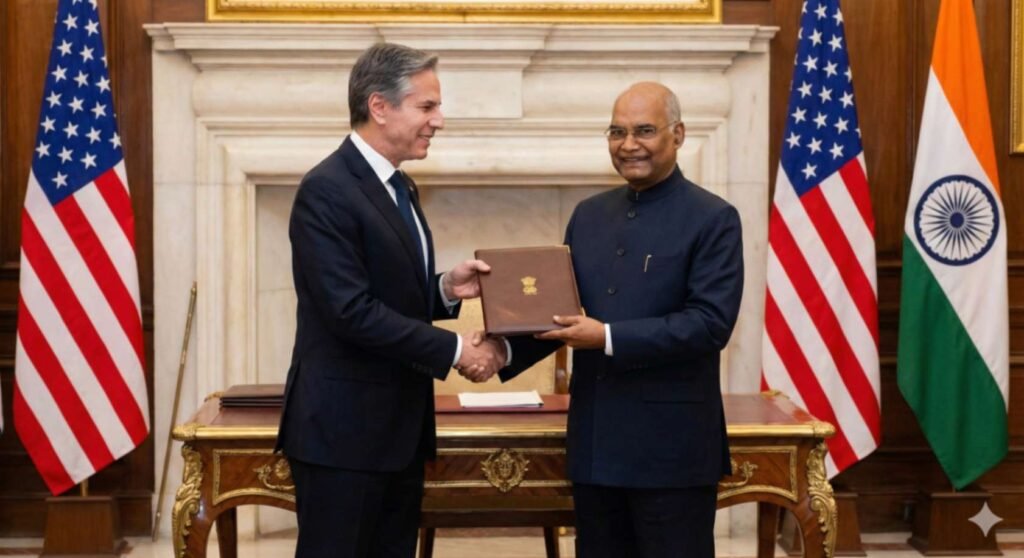
Sergio Gor Assumes Charge as US Ambassador to India. A significant milestone in international diplomacy has been reached as Sergio Gor formally assumes his duties as the new United States Ambassador to India. The envoy presented his credentials in New Delhi, marking the official commencement of his tenure. This development heralds a fresh chapter in the strategic partnership between the two nations, with a renewed focus on mutual growth and cooperation. The arrival of the new ambassador underscores the importance Washington places on its relationship with New Delhi, signaling a commitment to deepening ties across various sectors including trade, defense, and technology.
A Future of Shared Democratic Values
The appointment of Ambassador Gor comes at a pivotal moment for global geopolitics, where the alliance between the world’s oldest and largest democracies plays a crucial role. As he takes charge, the diplomatic community anticipates a robust engagement strategy aimed at addressing shared challenges and seizing new opportunities. This transition is expected to foster open dialogue and reinforce the enduring bond between the American and Indian people. With a clear vision for the future, the new leadership at the embassy is set to navigate the complexities of modern diplomacy, ensuring that the trajectory of India-US relations remains on an upward path of stability and prosperity.
Who is Sergio Gor? The Profile of a Strategic Envoy
Before his arrival at the Roosevelt House in New Delhi, Sergio Gor served as the Director of the White House Presidential Personnel Office. His deep ties to the Trump administration provide him with direct access to the Oval Office, a level of political “clout” that many experts believe will expedite stalled negotiations.
Key Facts about Sergio Gor:
- Dual Role: He serves as both the US Ambassador to India and the Special Envoy for South and Central Asian Affairs.
- Credentials: He officially presented his credentials to President Droupadi Murmu on January 14, 2026.
- Focus Areas: Trade reciprocity, defense technology transfer, and the “Pax Silica” initiative for critical minerals.
The “Year of Reciprocity”: Defining the New Agenda
In his first public address, Gor emphasized that “no partner is more essential than India.” However, he also echoed Secretary of State Marco Rubio’s sentiment that 2026 will be a year of reciprocity. This suggests a shift toward more transactional but transparent diplomacy.
1. Breaking the Trade Deadlock
One of the most immediate priorities as Sergio Gor assumes charge as US Ambassador to India is the finalization of a comprehensive trade deal. For years, disagreements over tariffs and market access have been a friction point. Gor has already initiated high-level talks to resolve these issues, focusing on:
- Reducing tariffs on American dairy and agricultural products.
- Expanding Indian exports in the textile and pharmaceutical sectors.
- Energy security and increased American LNG exports to India.
2. Defense and Security Cooperation
Gor’s early days have seen significant activity in the defense sector. On February 16, 2026, he visited the Indian Army’s Western Command in Chandigarh alongside Admiral Samuel J. Paparo, Commander of the US Indo-Pacific Command.
This visit, while drawing some domestic political debate, highlights a deepening level of military-to-military cooperation and intelligence sharing, particularly regarding regional stability and the Indo-Pacific front.
The “Pax Silica” and Technological Synergy
Beyond traditional diplomacy, Gor is championing the Pax Silica initiative. This framework aims to secure supply chains for semiconductors and artificial intelligence. By integrating India into this US-led initiative, Gor seeks to ensure that the “world’s oldest and largest democracies” lead the global technological revolution.
”Real friends can disagree, but always resolve their differences in the end.” — Sergio Gor during his arrival speech in New Delhi.
What This Means for the Future of Indo-US Ties
The appointment of a political heavyweight like Gor suggests that the US views the partnership through a long-term strategic lens. His ability to bypass bureaucratic “limbo” and communicate directly with both the White House and the Prime Minister’s Office (PMO) could lead to:
- Faster Decision-Making: Moving from “intent” to “execution” in defense deals like the GE-F414 jet engine co-production.
- Economic Stability: Providing a predictable framework for US investors in India’s manufacturing sector.
- Regional Balancing: A more coordinated approach toward security challenges in South Asia.
Conclusion
As Sergio Gor assumes charge as US Ambassador to India, the “wait-and-watch” period of bilateral relations has ended. The focus has shifted to action, reciprocity, and a “once-in-a-lifetime opportunity” to redefine global diplomacy.