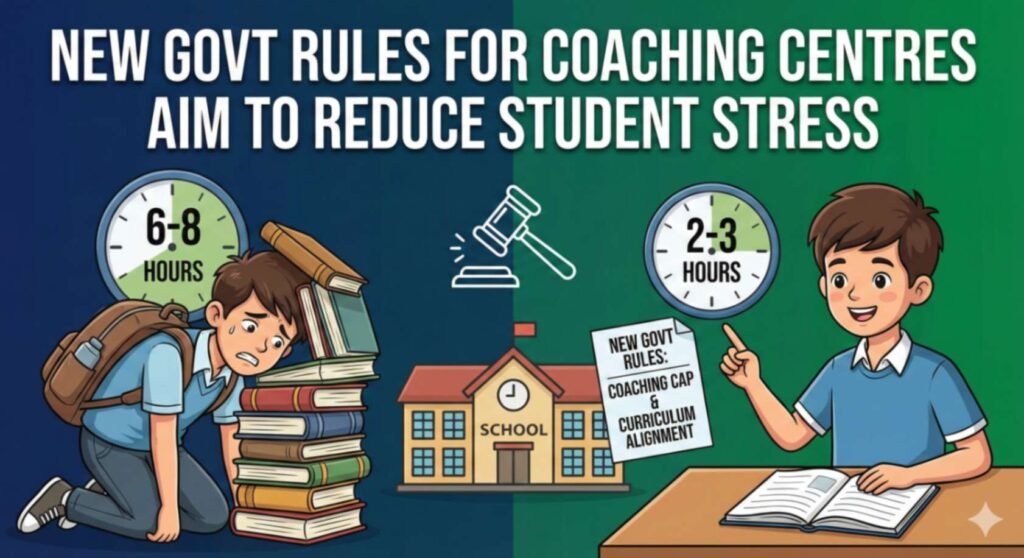
New Government Rules for Coaching Centres Aim to Reduce Student Stress. The conversation around student mental health in India is finally taking center stage with recent developments that promise a significant shift in how education is approached. A government-appointed committee has stepped forward with crucial recommendations designed to dismantle the high-pressure environment that currently surrounds competitive exam preparation. For years, students have juggled exhausting school hours with grueling coaching schedules, often leading to burnout and severe anxiety. The new proposal strikes at the heart of this issue by suggesting a strict cap on daily coaching classes, limiting them to just two or three hours a day. This move is not merely a regulatory update but a necessary intervention to ensure that children have time to rest, self-study, and simply be children.
Breaking the Cycle of Long Coaching Hours
One of the most impactful aspects of this recommendation is the limitation on the duration of coaching classes. Currently, it is common for aspirants of major competitive exams to spend upwards of six to eight hours in coaching centers after their regular school day. The committee’s suggestion to restrict this to a maximum of three hours is a game-changer for daily student life. By enforcing this cap, the government aims to return valuable time to the students, allowing for adequate sleep and mental recovery. This reduction in mandatory classroom hours encourages a healthier lifestyle where academic pursuit does not come at the cost of physical and mental well-being. It acknowledges that effective learning happens when the mind is fresh, rather than when a student is fatigued from a fourteen-hour workday.
Aligning School Curricula with Competitive Exams
Beyond just cutting down hours, the committee has addressed the root cause of the “dummy school” culture and the double burden of studying. The recommendation includes a strategic redesign of school curricula to better align with the requirements of competitive entrance examinations. Historically, the disconnect between school board syllabi and the advanced content required for exams like JEE and NEET forced students to treat school as a formality while focusing entirely on coaching. By bridging this gap, schools can become the primary source of learning once again. This alignment means that what a student learns in their regular classroom will directly contribute to their competitive success, reducing the desperate need for supplementary coaching and lowering the overall academic load.
A Future Focused on Holistic Well-being
These proposed changes signal a hopeful transition toward a more empathetic educational framework in India. Parents and educators are beginning to recognize that rank and percentile cannot replace mental stability and happiness. While the implementation of these guidelines will require cooperation between educational boards and private institutions, the intent is clear. The goal is to foster an environment where ambition does not equate to suffering. As these recommendations move toward becoming policy, the hope is that the next generation of students will be able to pursue their dreams of becoming doctors and engineers without sacrificing their youth to stress and exhaustion.
Key Highlights of the New Guidelines
The new regulatory framework addresses several core issues, ranging from age restrictions to mental health support. Below are the most impactful changes every student and parent should know:
1. Minimum Age and Qualification for Enrollment
One of the most significant shifts is the age cap. Coaching centres are now prohibited from enrolling students below the age of 16 or those who have not yet completed their secondary school (Class 10) examinations. This ensures that younger children are not pulled into the competitive cycle prematurely and can enjoy a standard school environment.
2. Capped Study Hours and Mandatory Breaks
To combat physical and mental exhaustion, the government has set strict limits on daily operations:
- Daily Limit: Coaching hours must not exceed 5 hours per day.
- No Early/Late Classes: Classes cannot be held too early in the morning or too late at night.
- Weekly Offs: Both students and teachers are entitled to a mandatory weekly off.
- Buffer Days: No tests or exams can be conducted on the day following a weekly off, ensuring students actually get to rest.
3. Professional Mental Health Support
Under the New Government Rules for Coaching Centres, mental health is no longer an optional consideration.
- Institutes with over 100 students must appoint a qualified counsellor or psychologist.
- Smaller centres are required to have tie-ups with external mental health professionals.
- Centers must display helpline numbers, such as Tele-MANAS, prominently in common areas.
4. Transparency in Fees and Results
The “guaranteed rank” culture is being dismantled through strict marketing standards:
- No Misleading Ads: Centers are forbidden from making false claims about 100% selection or guaranteed ranks.
- Fair Refund Policy: If a student leaves mid-course, the institute must provide a pro-rata refund within 10 days.
- Website Disclosures: Every centre must maintain an updated website detailing tutor qualifications, course fees, and hostel facilities.
Why These Rules Are a Game-Changer
The primary goal of these regulations is to re-establish schools as the primary centers of learning and to reduce the parallel schooling system. By mandating co-curricular activities and spaced-out curriculums, the government is encouraging a more balanced lifestyle.
”The mental health of students is paramount. These rules ensure that coaching becomes a support system rather than a source of trauma.” — Education Policy Analyst
Summary of Penalties for Non-Compliance
To ensure these aren’t just “paper rules,” the government has introduced a tiered penalty system:
| Offence | Penalty Amount |
| :— | :— |
| First Violation | ₹25,000 |
| Second Violation | ₹1,00,000 |
| Subsequent Violations | Revocation of Registration |
Moving Toward a Stress-Free Future
The New Government Rules for Coaching Centres represent a much-needed intervention. While exams like NEET and JEE will remain competitive, the environment in which students prepare for them is finally getting a human-centric makeover. Parents are encouraged to verify the registration and safety standards of any institute before enrollment to ensure their child’s safety and well-being.