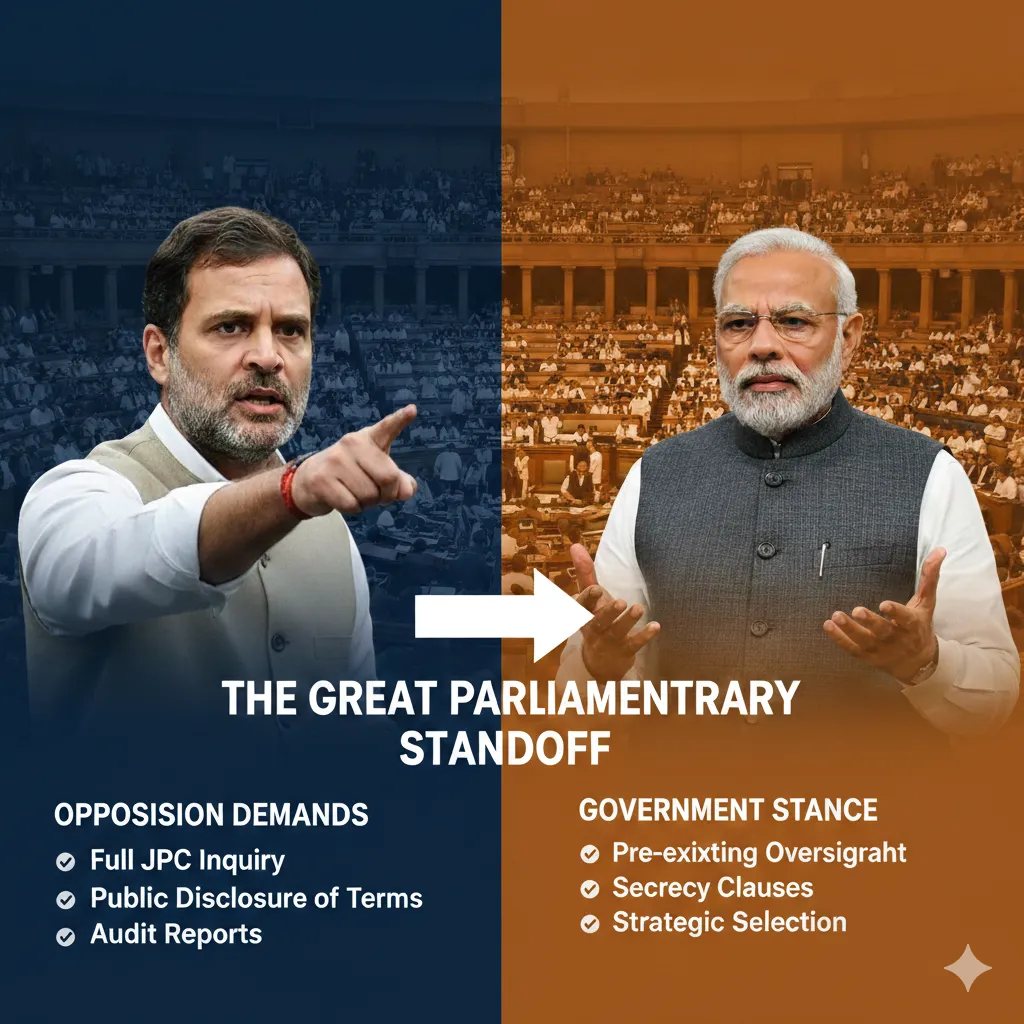
The Indian Parliament, often referred to as the temple of democracy, has recently transformed into a literal battlefield of ideologies. Led by Leader of the Opposition (LoP) Rahul Gandhi, a revitalized opposition has shifted from passive resistance to an aggressive, front-foot offensive amid the ongoing Rahul Gandhi Parliament Ruckus.
At the heart of this latest ruckus is a demand that has echoed through the hallowed halls of the Lok Sabha: Total Transparency. The opposition is raising the stakes, labeling recent government agreements as “compromised” and demanding a level of accountability that has set the stage for a prolonged political stalemate.
The Spark: What Triggered the Latest Ruckus?
The current tension isn’t just about a single policy; it’s about a pattern of governance that the opposition claims sidesteps legislative scrutiny. Rahul Gandhi has been vocal in alleging that multi-billion dollar deals—ranging from defense acquisitions to infrastructure projects—lack the necessary “check and balance” mechanisms.
Key Opposition Allegations:
- Lack of Competitive Bidding: Claims that contracts are being handed to “preferred partners” without transparent auctions.
- The “Crony Capitalism” Narrative: A recurring theme where the opposition links government deals to a handful of industrial conglomerates.
- National Security Concerns: Specifically in defense deals, where Gandhi argues that “compromised” terms could weaken India’s strategic sovereignty.
Rahul Gandhi’s Evolution as the Face of Dissent
Since taking on the role of the Leader of the Opposition, Rahul Gandhi has adopted a more sharp-edged rhetorical style. He is no longer just criticizing policy; he is challenging the integrity of the decision-making process.
By using terms like “compromised,” the opposition is attempting to frame the narrative around ethics and national interest. This isn’t just political posturing; it is a calculated move to appeal to the taxpayer who wants to know where their money is going.
”Democracy is not just about voting; it is about the accountability of those in power to the people who put them there.” — This sentiment has become the rallying cry for the INDIA bloc.
Why “Transparency” is the New Political Currency
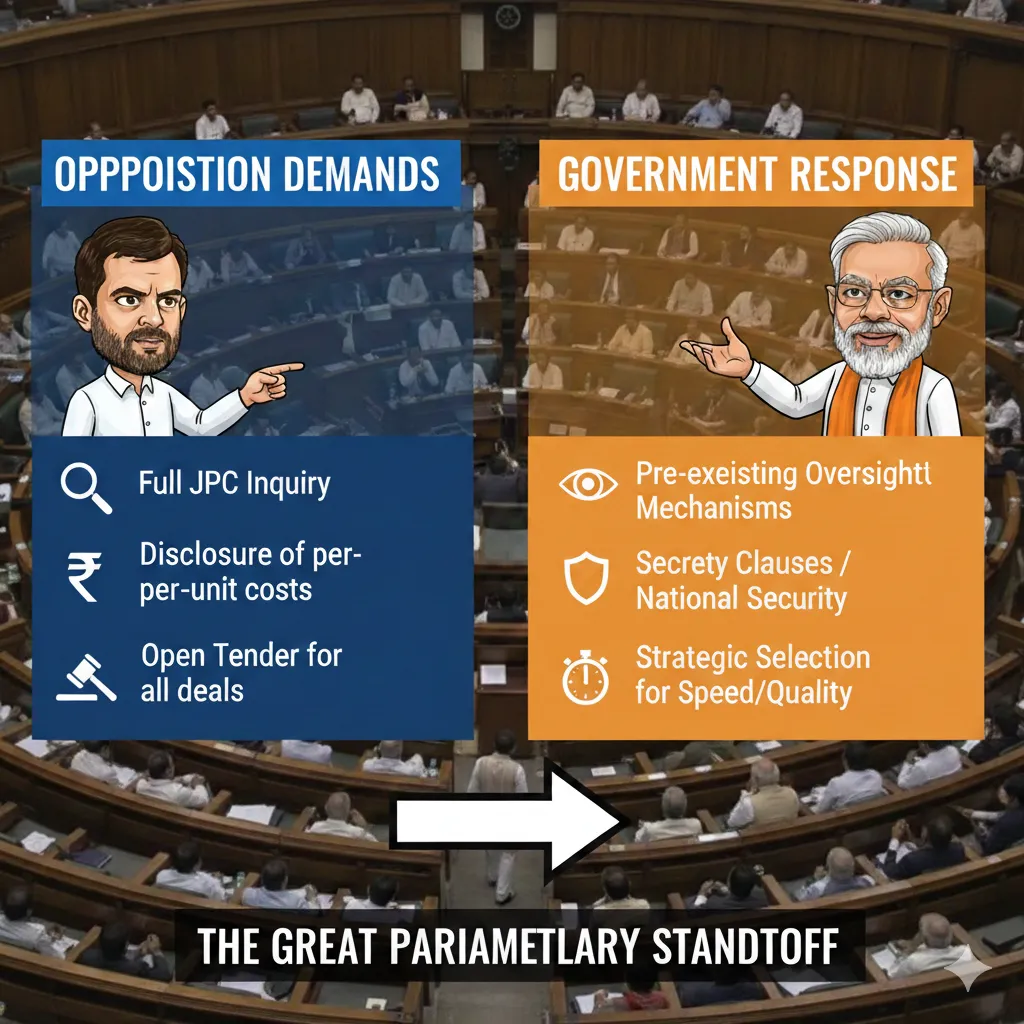
In the age of instant information, the demand for transparency resonates deeply with the electorate. The opposition’s strategy is to force the government into a defensive position by asking for:
- Joint Parliamentary Committee (JPC) Probes: The most potent tool in the opposition’s arsenal to investigate alleged irregularities.
- Public Disclosure of Terms: Demanding that the “fine print” of international and domestic deals be laid bare in Parliament.
- Audit Reports: Utilizing the Comptroller and Auditor General (CAG) findings to bolster their claims of financial mismanagement.
The Impact on Governance and Legislation
When Parliament is stalled by a “ruckus,” the real casualty is legislative business. Important bills related to data privacy, labor laws, and economic reforms often get pushed to the sidelines. However, the opposition argues that a “halted Parliament is better than a hijacked democracy.”
The “Compromised” Deal Narrative
The word “compromised” is heavy with implication. It suggests that the terms of a deal were altered to benefit a third party at the expense of the state. By focusing on this, Rahul Gandhi is attempting to chip away at the government’s “clean” image, a cornerstone of the ruling party’s electoral appeal.
The Path Forward: Can the Deadlock be Broken?
For the Parliament to function, a middle ground must be found. This usually involves:
- Speaker Intervention: The Speaker of the Lok Sabha playing a neutral role in facilitating debate.
- Assurance of Discussion: The government agreeing to a dedicated time-slot to discuss the “compromised” deals in exchange for the opposition allowing other bills to pass.
- Fact-Checking and White Papers: The government releasing “White Papers” to clarify the technicalities of the disputed deals.
Conclusion: A Healthy Sign for Democracy?
While the shouting matches and walkouts may seem chaotic, they are a sign of a functioning—albeit noisy—democracy. An opposition that questions is an opposition that performs its duty. Rahul Gandhi’s insistence on transparency might be a thorn in the side of the treasury benches, but it forces a dialogue on how India’s resources are managed.