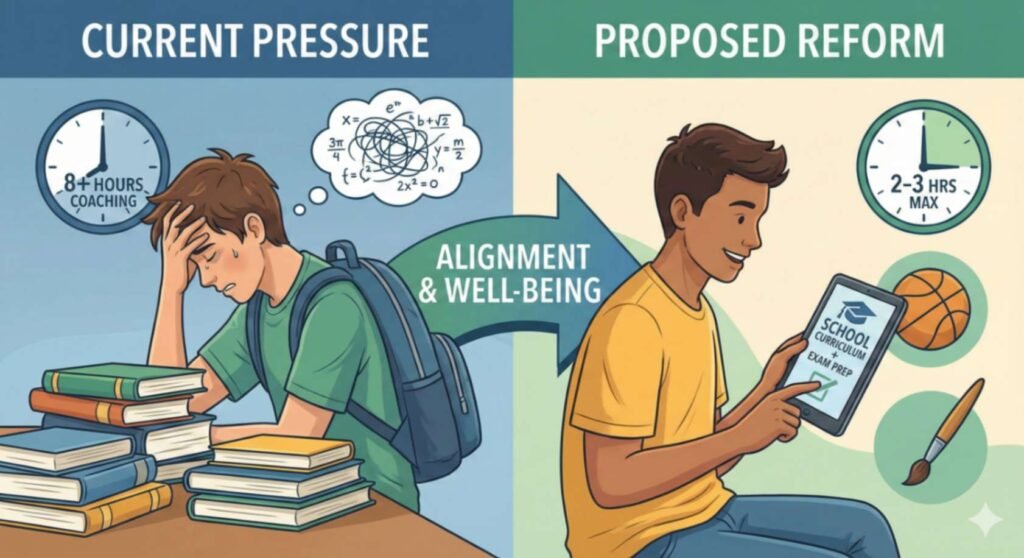
The recent proposal by a government-appointed committee marks a potentially transformative moment for the education sector, specifically aiming to alleviate the intense pressure resting on the shoulders of young students. By suggesting a strict cap on coaching classes to a maximum of two to three hours daily, the committee is directly addressing the burnout culture that has become synonymous with exam preparation in India. This move is not just about reducing hours but about reclaiming childhood and ensuring that students have time for rest, self-study, and extracurricular activities that are crucial for holistic development. The heavy reliance on private tuition has often led to a parallel schooling system that drains both the mental energy of students and the financial resources of parents, making this regulatory step a significant topic of discussion among educators and families alike.Furthermore, the recommendation extends beyond just time management to the very core of what is taught in classrooms. The proposal to redesign school curricula to better align with competitive exams bridges a long-standing gap that has forced students to juggle two different syllabi simultaneously. If implemented effectively, this alignment could render excessive coaching redundant, as schools would finally become the primary centers of learning for both board exams and entrance tests. This structural change promises a more streamlined educational journey where the focus shifts from rote memorization in coaching centers to conceptual understanding within the school environment. As the government considers these recommendations, the hope is that these reforms will foster a healthier academic atmosphere, prioritizing student well-being alongside academic excellence.
The New Reality: Capping Coaching Hours
One of the most significant changes involves the strict regulation of coaching center operations. Recognizing that students were spending upwards of 12–14 hours a day in academic settings, the Ministry of Education has introduced a revolutionary cap on study hours.
- 2-3 Hour Daily Limit: A central committee has proposed that coaching classes be restricted to a maximum of 2–3 hours per day.
- No Classes During School Hours: To eliminate the “dummy school” culture, coaching centers are strictly prohibited from conducting classes during regular school timings.
- Mandatory Downtime: New guidelines mandate at least one weekly off, with no tests allowed the day after a holiday to ensure students actually rest.
- Age Restrictions: Enrollment is now barred for students below 16 years of age, ensuring that childhood isn’t lost to competitive drilling.
Realigning the School Syllabus: Closing the Gap
A major driver of student stress has been the mismatch between what is taught in school and what is asked in competitive exams. The government’s move to update the school syllabus under the National Education Policy (NEP) is designed to make external coaching unnecessary.
Key Syllabus Reforms:
- Alignment with Entrance Exams: The Class 11 and 12 curriculum is being synchronized with the JEE and NEET syllabi, ensuring that a student who excels in school is naturally prepared for competitive tests.
- Competency-Based Learning: Moving away from rote memorization, the updated syllabus focuses on critical thinking, logical reasoning, and real-world application.
- Hybrid Assessment Models: Future entrance exams may give significant weightage to board exam marks, reducing the “do-or-die” nature of a single three-hour test.
Prioritizing Mental Well-being
Beyond academic shifts, the government has made mental health support a legal requirement for educational institutions.
”The mental health of students is paramount. Negligence at any level will not be tolerated.” — Ministry of Education Directive.
Coaching centers with more than 50 students must now have registered counselors on-site. Furthermore, the practice of “batch segregation” based on marks—which often shames and demotivates students—has been banned.
Why These Changes Matter
- Holistic Development: Students now have time for sports, arts, and sleep.
- Equity: Reducing reliance on expensive coaching levels the playing field for students from rural and economically weaker backgrounds.
- Safety: Stricter infrastructure and fire safety norms for coaching centers ensure a secure learning environment.
Conclusion
The Government Moves to Limit Coaching Classes and Update School Syllabus represent a long-overdue “philosophical reset” in education. By returning the focus to the school classroom and acknowledging the importance of mental health, these reforms promise a future where learning is driven by curiosity rather than fear.