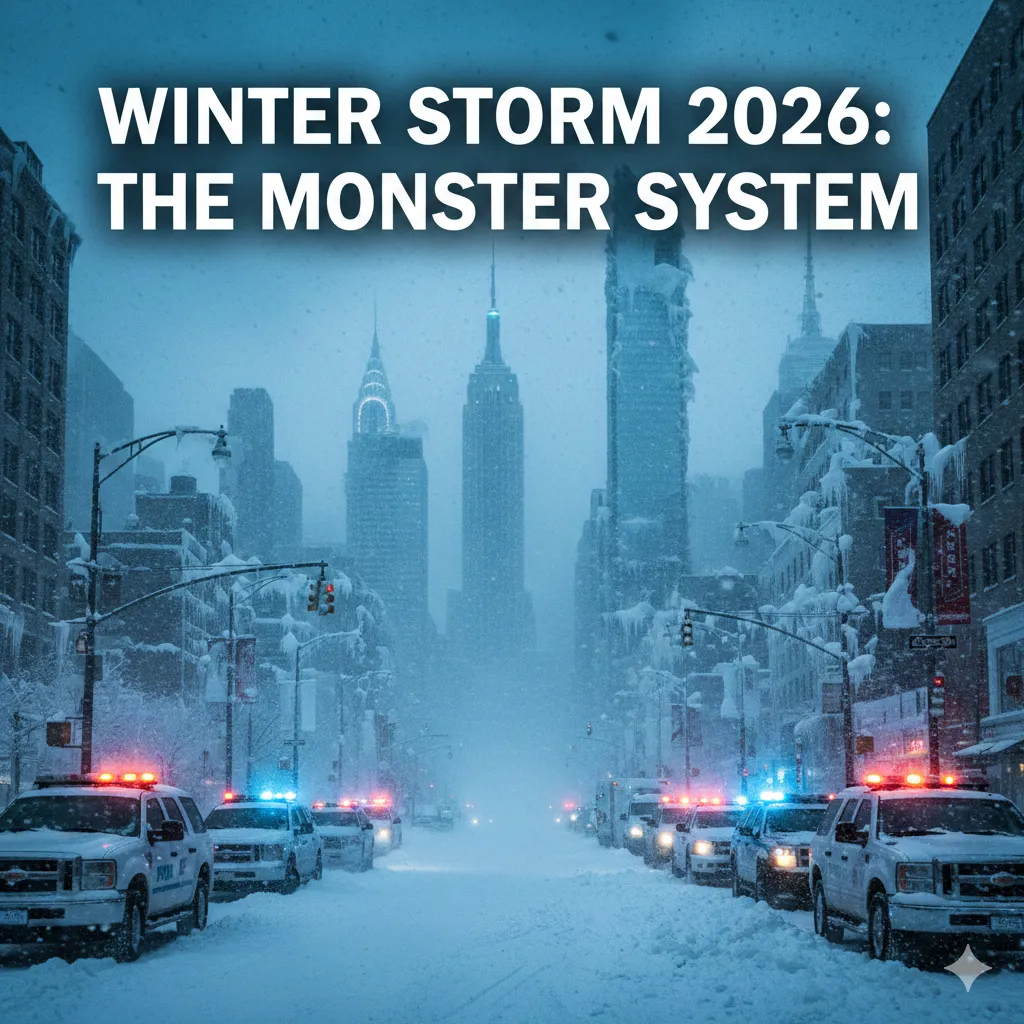
A severe winter storm, unofficially dubbed “Winter Storm Fern,” is currently barreling across the United States, leaving a trail of ice, snow, and travel chaos in its wake. With at least 16 states declaring emergencies and millions of Americans under weather alerts, this system is shaping up to be one of the most dangerous weather events of early 2026.
From the Southern Plains to the Northeast, residents are bracing for what meteorologists are calling a “monster” storm. Whether you are worried about flight cancellations, power outages, or hazardous road conditions, here is everything you need to know to stay safe.
Table of Contents
- The Scope of the Storm: What You Need to Know
- 16 States Declare Emergency: Is Your State Listed?
- Travel Chaos: Thousands of Flights Grounded
- Power Outage Risks and Safety Tips
- Conclusion: Stay Warm and Stay Informed
The Scope of the Storm: What You Need to Know
This massive weather system began in the Rockies and has rapidly expanded, threatening the eastern two-thirds of the country. The National Weather Service (NWS) has issued warnings for a mix of heavy snow, sleet, and freezing rain.
Unlike typical winter storms, the danger here isn’t just snow—it is ice.
- The Path: The storm is moving from Texas and Oklahoma, sweeping through the Deep South (Mississippi, Alabama, Georgia), and marching up the East Coast toward New York and Maine.
- The Threat: “Catastrophic” ice accumulation is predicted for parts of the South, while the Midwest and Northeast could see up to 14 inches of snow.
- The Temperature: An Arctic blast is following the precipitation, plunging temperatures well below freezing and making travel treacherous for days.
16 States Declare Emergency: Is Your State Listed?
Governors across the nation are not taking chances. Declaring a state of emergency allows officials to mobilize the National Guard and access federal resources quickly.
As of Saturday morning, the following states (plus Washington D.C.) have issued emergency declarations:
- The South: Texas, Louisiana, Mississippi, Alabama, Georgia, South Carolina, North Carolina, Arkansas, Kentucky, Tennessee, Virginia.
- The Northeast & Midwest: Maryland, Pennsylvania, New York, Missouri, Kansas.
What this means for you:
If you live in these areas, expect government offices to potentially close and emergency vehicles to prioritize main roads. Authorities in states like Texas and New York are explicitly urging residents to stay off the roads to avoid stranding and accidents.
Note: Even if your state isn’t on this list, check your local forecast. The storm’s path can shift unexpectedly.
Travel Chaos: Thousands of Flights Grounded
If you have travel plans this weekend, you likely need to reschedule. The severe winter storm has wreaked havoc on the aviation industry.
- Flight Cancellations: Over 7,000 flights have been cancelled across the weekend. Major hubs like Dallas (DFW), Atlanta (ATL), and New York (JFK/LGA) are seeing massive disruptions.
- Road Closures: Highways in Oklahoma and Missouri are reporting “whiteout” conditions. In the South, black ice is turning bridges and overpasses into skating rinks.
Travel Tip: Check your airline’s app before leaving for the airport. Most major airlines (Delta, United, American) are offering travel waivers, allowing you to rebook without penalty.
Power Outage Risks and Safety Tips
Perhaps the biggest threat from this severe winter storm is the potential for widespread power outages. Heavy ice accumulation can snap tree limbs and down power lines, a scenario that is particularly dangerous in the South where infrastructure is less winter-proof.
Reports indicate that millions are at risk of losing electricity as the storm intensifies.
Essential Safety Checklist
- Stay Indoors: Frostbite can set in within minutes in extreme cold.
- Generator Safety: Never run a generator inside your home or garage. Carbon monoxide poisoning is a silent killer during winter storms.
- Charge Devices: Keep your phones and rechargeable batteries fully charged in case the power goes out.
- Emergency Kit: Ensure you have non-perishable food, water, and warm blankets accessible.
Protecting Your Home
- Pipes: Drip your faucets to prevent freezing pipes.
- Heat: If you lose power, close off unused rooms to conserve heat.
Conclusion: Stay Warm and Stay Informed
This severe winter storm is a rapidly evolving situation. With 16 states in emergency mode and dangerous ice threatening the power grid, the best course of action is to stay home and stay safe.