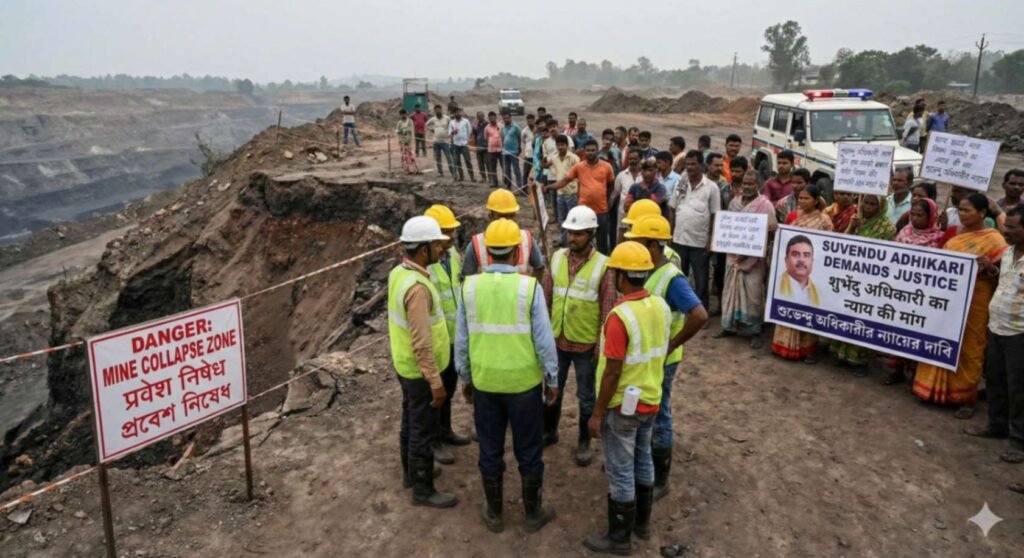
The Heartbreaking Incident in the Coal Belt
Illegal Mine Collapse. A somber shadow has once again fallen over the industrial heartland of West Bengal as a tragic accident in an unauthorized coal mine has resulted in the loss of life. Reports confirm that three individuals have perished following the sudden subsidence of an illegal extraction site in the Asansol region. This catastrophe highlights the persistent and perilous issue of unregulated mining activities that continue to plague the area, often operated without safety protocols or official oversight. Local authorities rushed to the scene to conduct rescue operations, but for the three victims, help arrived too late, leaving families in devastation and sparking a fresh wave of public anger regarding administrative negligence.
Opposition Leader Suvendu Adhikari Issues Stern Warning
The political atmosphere has heated up significantly in the wake of this disaster. Opposition Leader Suvendu Adhikari has threatened to launch a massive agitation if the state administration fails to take immediate and decisive action against those responsible for facilitating these illegal operations. He has publicly accused the ruling party and local police of turning a blind eye to the thriving coal mafia syndicates in the region. Adhikari demanded a high-level probe, insisting that the families of the deceased receive substantial compensation and that the true masterminds behind this illicit trade be brought to justice, rather than just the ground-level workers.
The Continuing Menace of Illegal Mining
This incident is not an isolated tragedy but part of a recurring pattern in the coal belt of West Bengal. Despite numerous court orders and administrative promises to crack down on illegal collieries, the practice remains rampant due to the lure of quick money and the lack of alternative employment. Experts argue that until the nexus between the mafia and corrupt officials is completely dismantled, such avoidable disasters will continue to claim the lives of the poor and marginalized who are forced to work in these death traps. The latest collapse serves as a grim reminder that without systemic change and strict enforcement of the law, the ground beneath Asansol remains unstable in more ways than one.
The Incident: What Happened in Asansol?
In the early hours of Tuesday, a portion of an abandoned colliery—reportedly being operated illegally—caved in. Local witnesses describe a scene of chaos as the earth gave way, trapping several individuals who were extracting coal without formal authorization or safety equipment.
Despite the rapid response from local villagers, the structural instability of the site hampered initial rescue efforts. By the time emergency teams arrived, three individuals were confirmed dead, while others were treated for varying degrees of injury.
Key Details of the Tragedy:
- Location: Abandoned mining patch near the Asansol-Raniganj belt.
- Casualties: Three confirmed fatalities; several others injured.
- Cause: Structural failure of a “rat-hole” mine during unauthorized extraction.
The Dangerous Reality of Illegal Mining
An illegal mine collapse is rarely a freak accident; it is often the inevitable result of “rat-hole” mining. These unregulated operations involve digging narrow tunnels—often just three to four feet high—without any timbering or steel supports to prevent roof falls.
Note: Illegal mining in this region is driven by a complex mix of poverty, high coal demand, and the presence of vast, unmonitored abandoned pits.
Political Uproar: The Blame Game Begins
The tragedy has quickly transitioned from a humanitarian crisis to a political battleground. In the wake of the deaths, local and state leaders have traded sharp accusations regarding who is responsible for the oversight of these collieries.
Points of Contention:
- Jurisdiction: Debates have surfaced over whether the responsibility lies with the Central Government (which oversees Coal India Limited and its subsidiaries) or the State Government (responsible for law and order).
- Enforcement: Opposition parties allege a “nexus” between local mafias and administrative officials, claiming that the illegal mine collapse was preventable had patrolling been stricter.
- Compensation: Protests have erupted demanding immediate financial aid for the families of the deceased, further intensifying the standoff between political factions.
Why Do These Tragedies Keep Happening?
Despite repeated crackdowns, the cycle of illegal mining in the Asansol-Durgapur belt remains unbroken. Several factors contribute to this ongoing risk:
- Economic Desperation: For many locals, the risk of a mine collapse is weighed against the immediate need for income.
- Vast Geography: The sheer scale of abandoned mines makes it physically difficult for security forces to monitor every entry point.
- Demand for Cheap Fuel: Small-scale industries often rely on “black market” coal, providing a steady incentive for illegal operators.
Summary and Outlook
The recent illegal mine collapse in Asansol is a grim reminder that human lives are being traded for coal. While the political uproar continues to dominate headlines, the underlying issues of safety, economic alternatives, and stringent regulation remain unaddressed. Without a coordinated effort between central and state authorities, the “black gold” of Asansol will continue to extract a heavy price in blood.