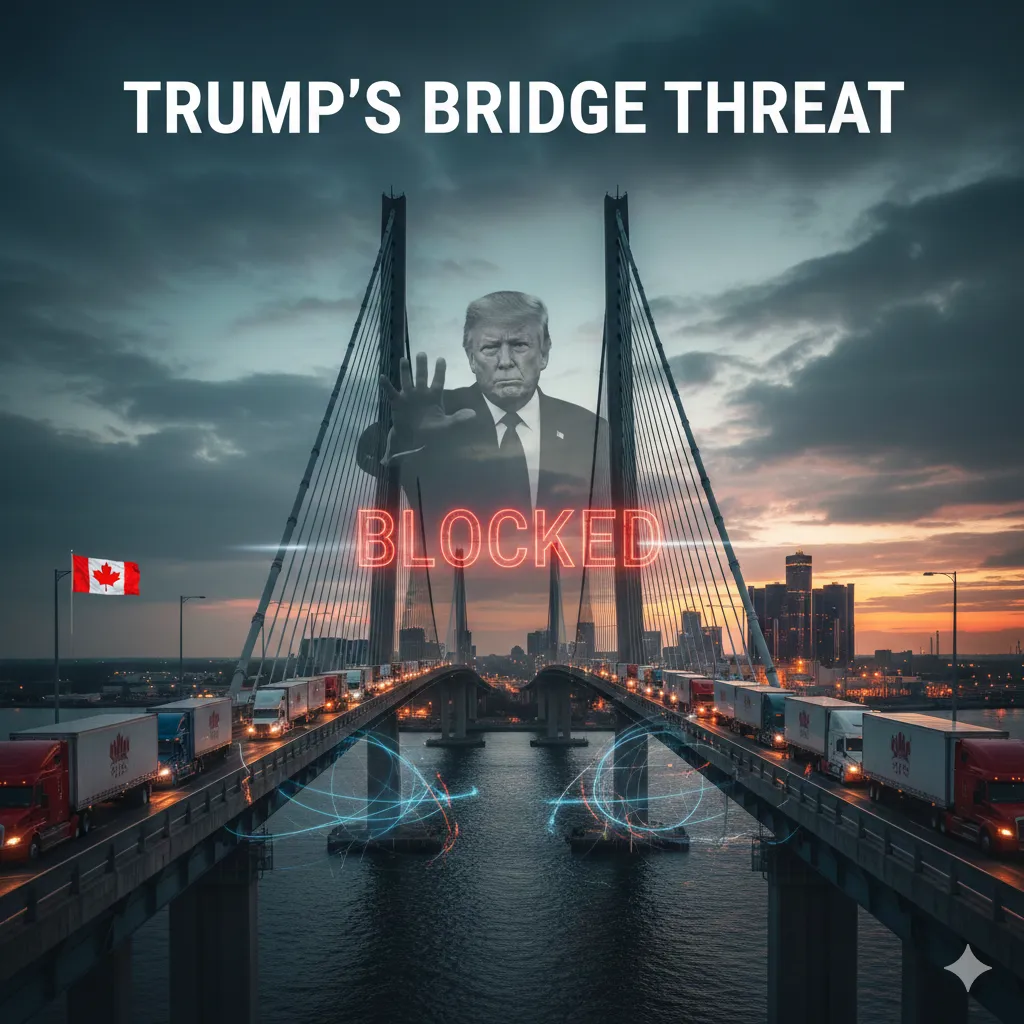
The relationship between the United States and Canada has long been defined by the world’s longest undefended border and a trillion-dollar trading partnership. However, that stability was recently shaken by Trump’s bridge threat. By signaling a potential block on the opening of a major international crossing, President Donald Trump has signaled that the “business as usual” approach to North American logistics is over.
This move isn’t just about steel and concrete; it is a high-stakes leverage play that could redefine cross-border commerce, supply chains, and diplomatic ties for decades to come.
The Core of the Controversy: What is the Bridge Threat?
At the heart of the tension is the nearly completed Gordie Howe International Bridge, designed to connect Detroit, Michigan, with Windsor, Ontario. While the project has been years in the making—intended to ease the bottleneck at the aging Ambassador Bridge—President Trump has suggested that its opening could be delayed or used as a bargaining chip in broader trade negotiations.
Why Target a Bridge?
Bridges are the arteries of the North American economy. Trump’s bridge threat serves several strategic purposes:
- Trade Leverage: By threatening the flow of goods, the administration gains a massive upper hand in renegotiating terms of the USMCA (United States-Mexico-Canada Agreement).
- Border Security: The President has frequently linked infrastructure to “border integrity,” suggesting that any new crossing must meet stringent (and potentially prohibitive) new security protocols.
- “America First” Logistics: There is an underlying push to ensure that US-based ports and transit routes are prioritized over international joint ventures.
Economic Implications of Blocking the Crossing
To understand why Trump’s bridge threat is so significant, one must look at the sheer volume of trade passing between Detroit and Windsor. Currently, the Ambassador Bridge carries roughly 25% of all merchandise trade between the two nations.
1. Supply Chain Disruptions
The automotive industry is particularly vulnerable. Parts often cross the border multiple times before a vehicle is fully assembled. A delay in opening a modern, high-capacity bridge means continued reliance on aging infrastructure, leading to:
- Increased idling times for freight trucks.
- Higher logistics costs for manufacturers.
- Potential “just-in-time” delivery failures.
2. Market Volatility
Markets dislike uncertainty. The mere suggestion of a physical trade barrier can lead to a dip in transport stocks and a cooling of foreign direct investment in Ontario and the American Midwest.
3. Inflationary Pressures
If transport becomes more difficult or expensive due to political maneuvering, those costs are inevitably passed down to the consumer. From produce to auto parts, the “bridge tax” could be felt in wallets across both nations.
The Political Calculus: Leverage and USMCA 2.0
President Trump has never shied away from using unconventional tactics to achieve better deal terms. Many analysts view the bridge threat as a precursor to the mandatory 2026 review of the USMCA.
By putting a physical piece of Canadian-funded infrastructure in the crosshairs, the administration sends a clear message: No previous agreement is set in stone.
”A bridge is more than a road; it’s a valve. If you control the valve, you control the flow of the entire relationship.” — Trade Policy Analyst
Canada’s Response: Diplomacy vs. Resilience
The Canadian government, led by Prime Minister Justin Trudeau, finds itself in a delicate position. Canada has already invested billions into the Gordie Howe project. A block or significant delay would represent a massive sunk cost and a logistical nightmare.
Canada’s likely strategies include:
- Legal Challenges: Invoking specific clauses within the USMCA that protect cross-border transit.
- Sub-National Diplomacy: Engaging directly with Michigan’s leadership, who view the bridge as a vital engine for state economic growth.
- Retaliatory Tariffs: Though a last resort, Canada has previously shown a willingness to target US goods in key electoral districts if pushed into a trade war.
The “America First” Infrastructure Vision
Trump’s bridge threat aligns with a broader vision of American isolationism and protectionism. The administration argues that international projects should not come at the expense of American security or domestic industry.
There is also the question of ownership and tolls. The Gordie Howe bridge is a Canadian-owned project. Trump’s rhetoric suggests a preference for infrastructure that is either strictly US-controlled or provides a more direct financial “win” for the US Treasury.
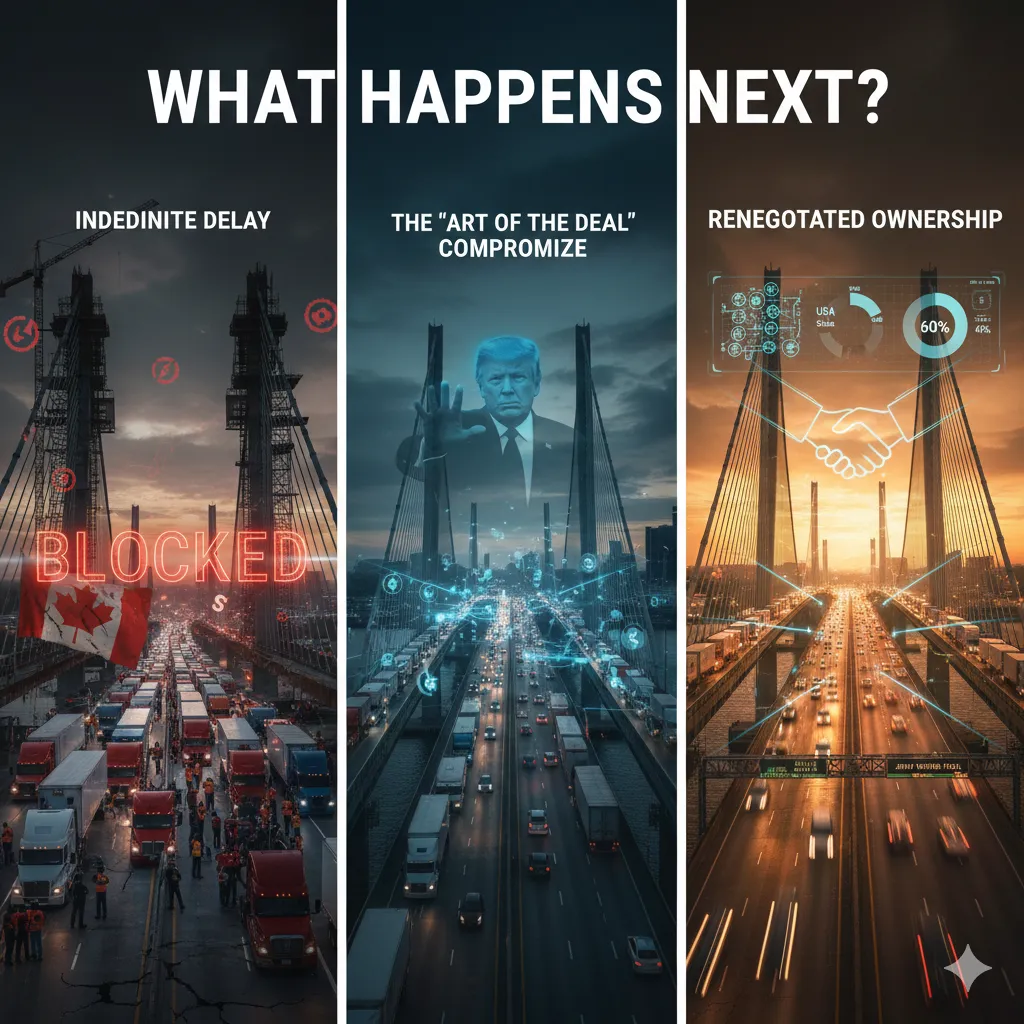
What Happens Next?
As we look toward the scheduled completion date of the bridge, several scenarios could unfold:
Conclusion: A Bridge Too Far?
Trump’s bridge threat has successfully injected a new sense of urgency (and anxiety) into North American trade discussions. Whether the bridge becomes a symbol of cooperation or a monument to protectionism remains to be seen. For now, businesses and diplomats alike must prepare for a future where even the most essential physical links are subject to the whims of geopolitical strategy.