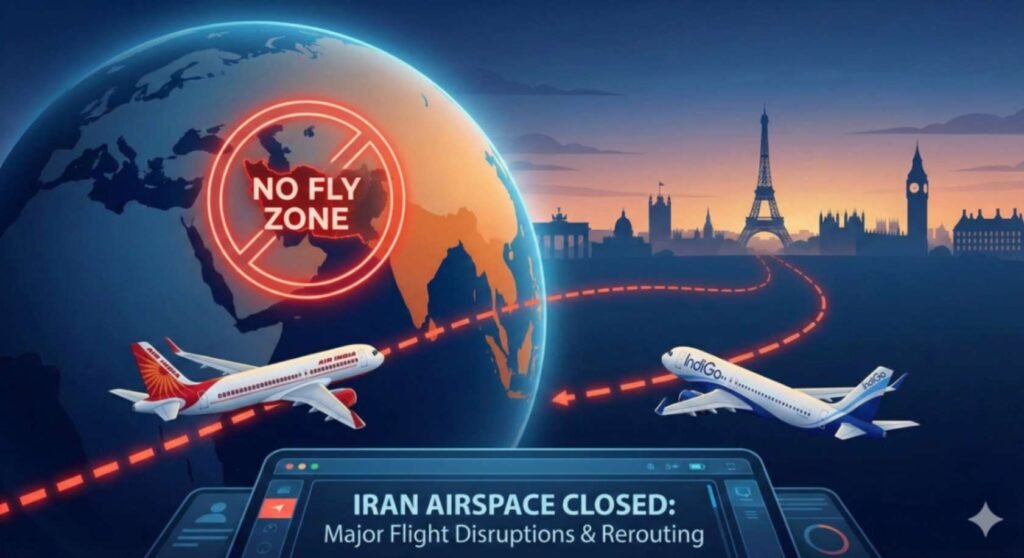
Understanding the Sudden Airspace Restrictions in Iran
Iran Airspace Closure. A major disruption has hit the aviation sector as Iran closed its airspace amid escalating internal protests and rising geopolitical tensions. This sudden development has forced international airlines to make immediate adjustments to their flight paths to ensure passenger safety. The closure comes as a precautionary measure due to the volatile situation on the ground where widespread demonstrations are reportedly taking place. Consequently, the aviation corridor over Iran, which is a critical route connecting Asia to Europe and the West, has become temporarily inaccessible or highly restricted for commercial aircraft. Authorities are closely monitoring the region, but the unpredictability of the events has led to significant operational challenges for carriers that rely on this airspace for their daily long-haul operations.
How Air India and IndiGo Are Managing the Rerouting
Indian carriers have been swift to respond to these challenges by altering their flight paths to avoid the Iranian airspace entirely. Air India has announced that its flights to Europe and the United States will now take longer alternative routes, likely flying over the Arabian Peninsula or other safe corridors. This diversion means that passengers should expect increased flight durations and potential delays in arrival times. Similarly, IndiGo has issued advisories stating that their flights to destinations like Istanbul and other western hubs are being rerouted. The airlines are working tirelessly to minimize the inconvenience, yet the longer distances require additional fuel and crew time, which inevitably impacts the scheduled operations. Both airlines have emphasized that the safety of their passengers and crew remains the top priority during this period of uncertainty.
Impact on Air India: Longer Routes and Delays
Air India, which operates extensive long-haul routes to North America and Europe, is facing significant logistical challenges.
- Rerouting: Most west-bound flights are now skirting Iranian airspace, often flying over Iraq or taking more southerly routes via Saudi Arabia and Egypt.
- Increased Flight Time: Expect journeys to be 1.5 to 3 hours longer. For example, Delhi-New York and Mumbai-London flights are seeing a notable increase in “block time.”
- Cancellations: Air India has previously had to cancel select services to New York (JFK) and Newark when rerouting was not operationally feasible due to fuel constraints.
Impact on IndiGo: Massive Cancellations to Central Asia
While IndiGo doesn’t fly to the US, its burgeoning international network toward the Caucasus and Central Asia has been hit hard.
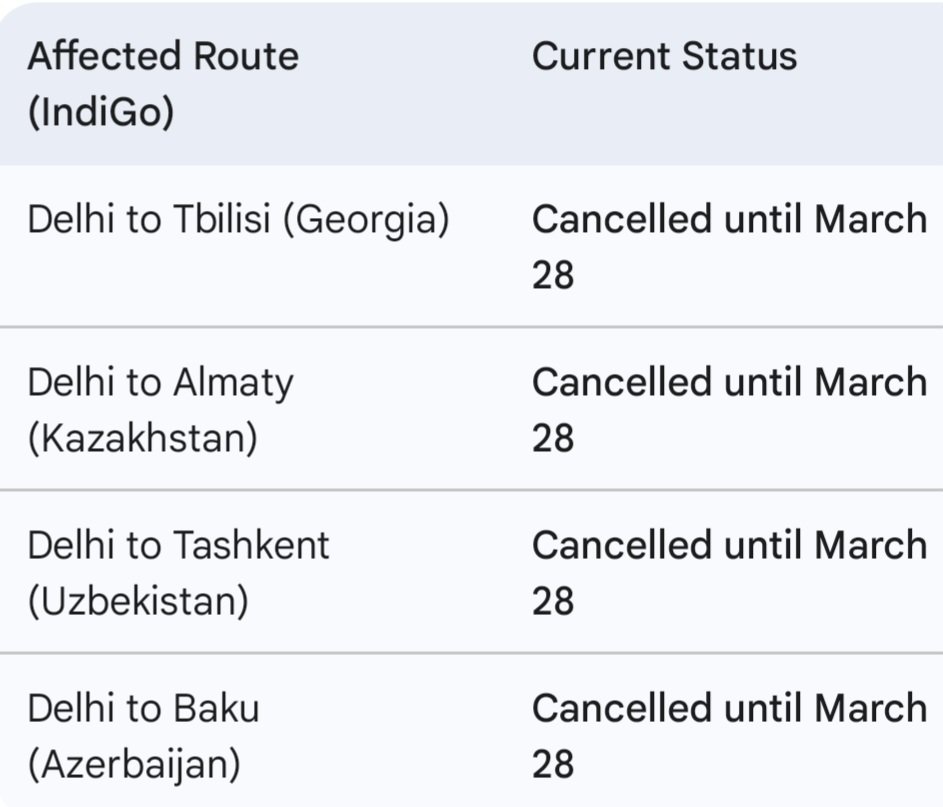
- Extended Suspension: IndiGo has officially extended the cancellation of flights to and from Tbilisi, Almaty, Baku, and Tashkent until March 28, 2026.
- European Routes: Flights to Istanbul and Milan are being rerouted, leading to increased fuel consumption and potential technical stops for some narrow-body aircraft.
- Service Reductions: To manage their fleet of Dreamliners, IndiGo has also reduced frequencies on the Delhi-London and Delhi-Manchester routes.
What Should Travelers Do?
The Iran airspace closure is a fluid situation. If you are booked on a flight with Air India or IndiGo, follow these steps:
- Check Flight Status Regularly: Use the airline’s official mobile app or website for real-time updates.
- Verify Refund Rights: IndiGo is offering full refunds or free rescheduling for passengers on the cancelled Central Asian routes.
- Prepare for Longer Layovers: If your flight is rerouted, your arrival time may shift, potentially impacting connecting flights.
- Monitor Travel Advisories: Keep an eye on the Ministry of External Affairs (MEA) and airline social media handles for the latest “Urgent Travel Alerts.”
What Travelers Should Do During This Disruption
Passengers scheduled to fly to Europe, the United States, or the Middle East in the coming days must stay proactive regarding their travel plans. It is highly recommended to check flight statuses frequently on the official airline websites or mobile apps before heading to the airport. Since rerouting often leads to longer flight times, travelers should prepare for potential delays and adjust their connecting flight schedules accordingly. Airlines are likely to offer waivers or rescheduling options for those significantly affected by these sudden changes. Staying informed through official airline channels and keeping contact details updated for real-time notifications is the best way to navigate this evolving situation smoothly.