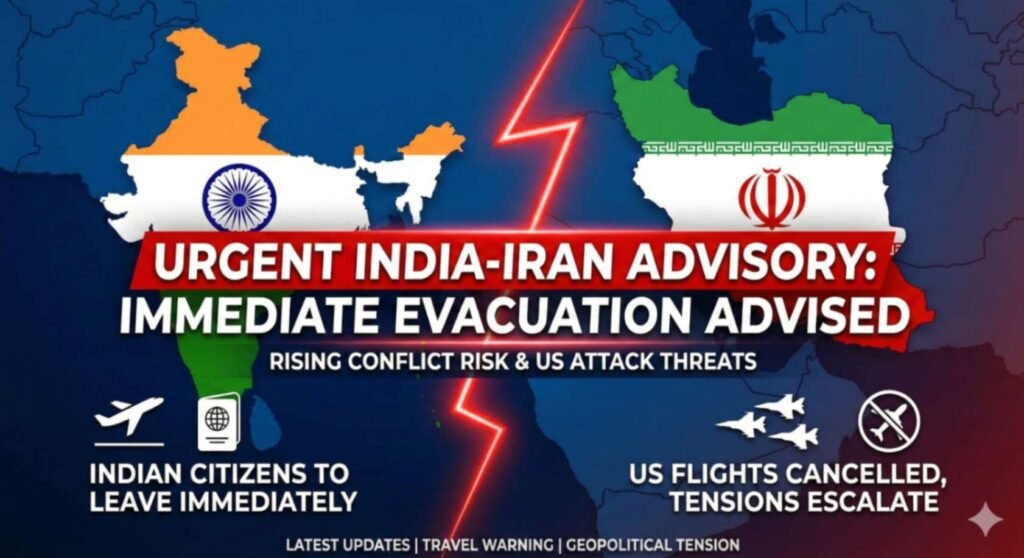
Escalating Geopolitical Tensions and Security Threats
India Issues Immediate Evacuation Advisory for Citizens in Iran Amidst Rising Conflict Risks. The geopolitical landscape in the Middle East has taken a precarious turn, prompting New Delhi to issue a stark and urgent warning to its citizens currently residing in or visiting Iran. This latest advisory marks a significant escalation from previous travel cautions, reflecting the deepening instability within the region. Reports indicate that the directive stems from a combination of internal unrest across Iranian provinces and the looming threat of external military action, specifically citing potential strikes by the United States. The situation has become increasingly volatile following the abrupt cancellation of US flights, a move often interpreted by defense analysts as a precursor to heightened conflict or military engagement. This rapid deterioration of safety protocols has compelled the Indian Ministry of External Affairs to prioritize the immediate extraction of its nationals to prevent them from being caught in the crossfire of a potential war zone.
Immediate Action Required for Indian Nationals
Indian citizens, including students, pilgrims, tourists, and business professionals currently in Iran, are being strongly advised to leave the country forthwith using any available commercial means. The advisory underscores that waiting for the situation to normalize is not a viable option given the unpredictability of the current security dynamics. While commercial airspace remains open for the time being, the window for safe departure could close without warning should military operations commence or if civil aviation is grounded due to safety concerns. The Indian Embassy in Tehran has activated emergency protocols and is urging all nationals to remain in constant contact with diplomatic missions. It is imperative that individuals keep their travel documentation, such as passports and visas, ready for immediate use and avoid all areas witnessing protests or large gatherings, which are currently flashpoints for violence and security crackdowns.
Global Implications and Safety Measures
This development is not merely a bilateral concern but signals a broader destabilization that could have far-reaching consequences for global travel and regional security. The potential for a direct confrontation involving major global powers has put international diplomatic channels on high alert. Families of Indian nationals back home are advised to stay calm but vigilant, ensuring their loved ones in Iran are aware of the critical nature of this advisory. The focus remains strictly on the safety of human life, with authorities monitoring the ground reality hour by hour. As the situation evolves, staying updated through official government channels rather than unverified social media rumors is crucial for personal safety. The Indian government remains committed to facilitating the safe return of its people, but the primary onus is now on citizens to utilize available exit routes before the security infrastructure is further compromised.
Why has India issued an Evacuation Advisory for Citizens in Iran?
The decision to move toward an active evacuation advisory comes after weeks of mounting tension. While previous advisories in early 2026 urged the avoidance of “non-essential travel,” the latest update is much more direct.
Several factors have contributed to this urgent call:
- Widespread Civil Unrest: Clashes between security forces and opposition groups have intensified in multiple Iranian provinces.
- Airspace Stability: Occasional closures of Iranian airspace and the suspension of flights by major carriers like IndiGo have made commercial exit routes increasingly unpredictable.
- Infrastructure Disruptions: Frequent internet blackouts have made communication between the Indian Embassy in Tehran and the expatriate community challenging.
- Diplomatic Escalation: High-level discussions between External Affairs Minister S. Jaishankar and his international counterparts suggest that the window for stable commercial departure may be narrowing.
Key Directives for Indians Currently in Iran
The MEA and the Embassy of India in Tehran have laid out a clear roadmap for citizens to ensure their safety. If you or your loved ones are currently in the region, the following steps are mandatory:
1. Leave via Commercial Means Immediately
The government has emphasized that while commercial flights are still operating, citizens should not wait for government-sponsored airlifts. The evacuation advisory for citizens in Iran strongly recommends booking the earliest available commercial flight to India or a safe third country.
2. Mandatory Registration
All Indian nationals, including students and those on resident visas, must register their presence with the Indian Embassy. This allows the government to track the number of citizens in specific cities like Tehran, Isfahan, Qom, and Mashhad.
- Registration Link: Available on the official Embassy of India, Tehran website.
- Family Assistance: If internet shutdowns prevent registration locally, families in India can register details on behalf of their relatives through the MEA’s official portal.
3. Emergency Contact Numbers
The Embassy has activated 24/7 helplines for those requiring immediate assistance or travel documentation:
- Helpline 1: +98 912 810 9115
- Helpline 2: +98 912 810 9109
- Helpline 3: +98 912 810 9102
- Helpline 4: +98 993 217 9359
- Email: cons.tehran@mea.gov.in
Impact on Students and Professionals
The advisory has particular weight for the nearly 3,000 medical students and 4,000 seminary students in Iran. Education agents and the MEA are currently in talks with Iranian universities to facilitate remote-learning arrangements, ensuring that students who evacuate do not face academic setbacks.
Similarly, Indian companies involved in strategic projects, such as the Chabahar Port, have been advised to trigger their internal security protocols and move non-essential personnel out of the country.
Current Status: Is “Operation Sindhu” Being Revived?
As of February 2026, the Indian government has not yet officially launched a large-scale military evacuation (similar to past operations). However, the MEA has confirmed that charter flights are in the works as a contingency plan should commercial options vanish.
Important Note: The government currently does not consider Indians “stranded” because the airspace is open. However, this could change within hours depending on regional developments.
Conclusion: Act Now, Don’t Wait
The evacuation advisory for citizens in Iran serves as a vital warning. The priority of the Indian government is the “safety and well-being of its citizens abroad,” but the efficiency of any evacuation depends on the timely cooperation of the community. If you are in Iran, stay away from protest sites, keep your travel documents ready, and finalize your departure plans today.