Have you ever joined a WhatsApp group only to feel completely lost?
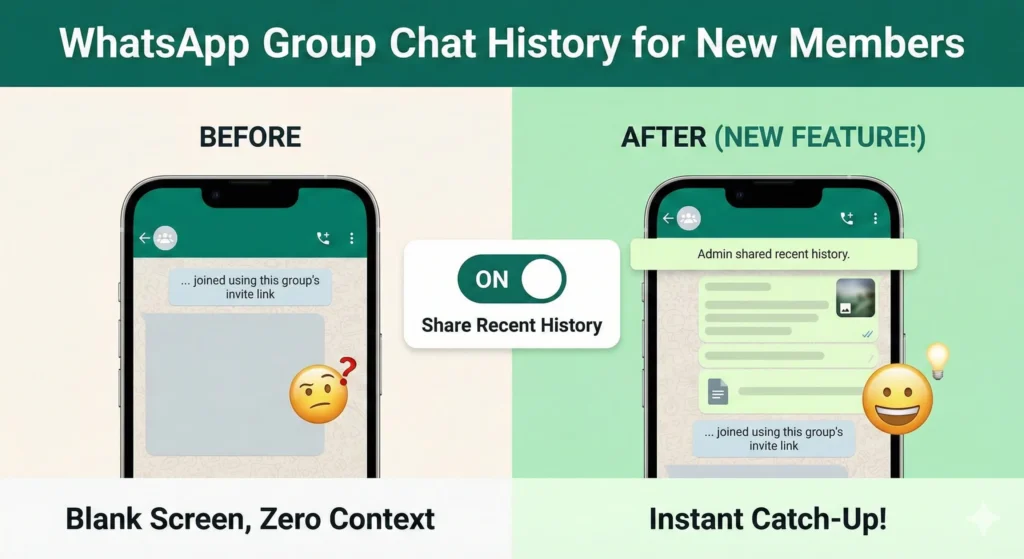
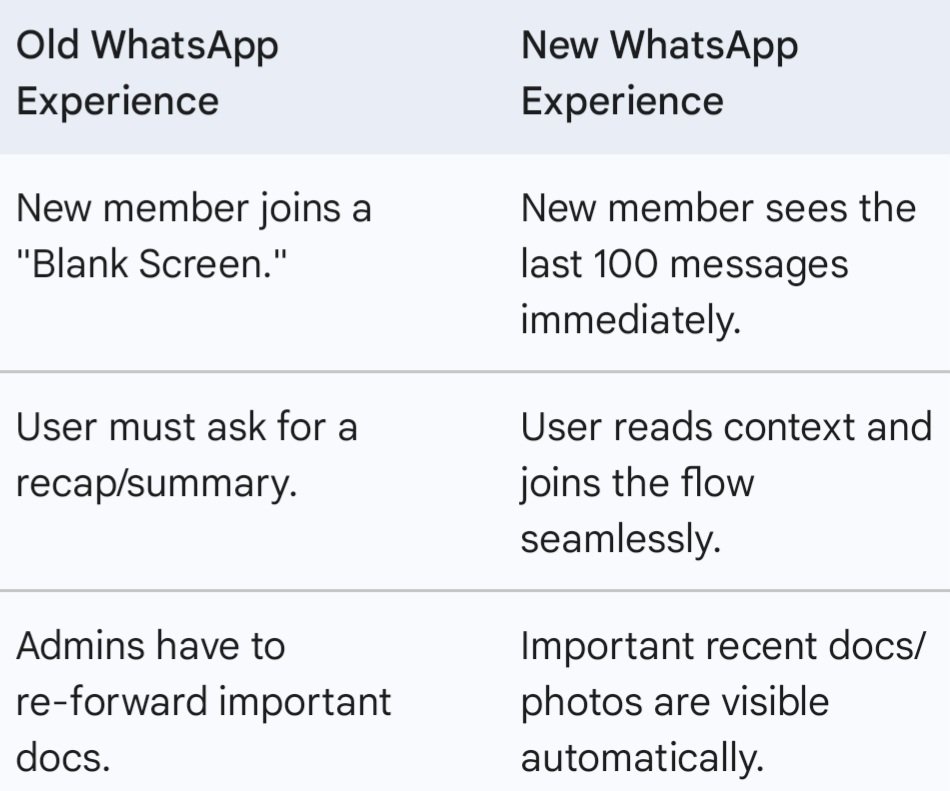
WhatsApp Group Chat History. We’ve all been there. You get added to a group planning a trip or a project, and the conversation is already in full swing. But your screen is blank. You have zero context, and you have to awkwardly ask, “Hey guys, what did I miss?” forcing everyone to repeat themselves.
For years, this has been one of the biggest complaints for WhatsApp users—especially when comparing the app to competitors like Telegram.
But that is finally changing. WhatsApp is rolling out a new feature that allows new group participants to view recent chat history sent before they joined. Here is everything you need to know about this trending update. WhatsApp Group Chat History.
What is the New “Share Recent Messages” Feature?
This new update, currently being tested in the latest beta versions (specifically iOS beta v26.2.10.73 and Android counterparts), addresses the “blank slate” problem.
Called “Share Recent Messages,” this feature gives group admins and current members the option to automatically share a snapshot of the conversation history with a new joiner.
The Key Limits
It’s important to note that this isn’t an unlimited archive like Telegram. To balance utility with privacy, WhatsApp has set specific boundaries:
- Message Limit: New members can see up to 100 recent messages.
- Time Limit: These messages must have been sent within the last 24 hours (some beta reports suggest a window of up to 14 days, but the primary focus is immediate context).
This ensures new members get the immediate context they need without exposing months of private history they weren’t part of.
How It Works: A Step-by-Step Guide
Unlike Telegram, where history sharing is often a global group setting, WhatsApp’s approach is granular and user-controlled.
- Adding a Member: When you (as an admin or member) go to add a new participant to a group, a new toggle will appear.
- The Toggle: You will see an option labeled “Share recent history” or “Share last 100 messages.”
- Visual Cues: Once the new user joins, the shared past messages will appear in their chat. Crucially, these messages are highlighted or visually distinct, so the new member knows they are reading past history, not live messages.
- Notification: To maintain transparency, the group is notified that “Didier shared recent history with the new participant.”
Note: This feature is disabled by default. The person adding the new member must actively choose to share the history.
Privacy and Encryption: Is It Safe?
Privacy enthusiasts often worry that sharing past messages breaks the “end-to-end encryption” promise. However, Meta has implemented this securely.
- E2EE Remains Intact: When you toggle the “Share History” option, your device securely re-encrypts the recent messages and sends them directly to the new member’s device.
- No Server Storage: WhatsApp is not storing these messages on a server to “forward” them later. It is a device-to-device transfer at the moment of joining.
- Consent: Because the sharing is manual, existing members have control. You won’t accidentally reveal sensitive history unless the person adding the new member decides to do so.
Why This Feature is Trending Now
This update is trending because it solves a significant friction point in professional and social communication.
When Will You Get This Feature?
Currently, this feature is available to select beta testers on iOS and Android.
- Current Status: Beta Testing (TestFlight & Google Play Beta Program).
- Expected Global Rollout: While no official date is set, features in this stage typically roll out to the general public within 2 to 4 weeks.
If you don’t see it yet, ensure your WhatsApp is updated to the latest version from the App Store or Google Play Store.
Conclusion
The ability to share recent chat history is a small change that makes a massive difference in user experience. It creates a smoother onboarding process for new group members and reduces repetitive explanations. While it may not offer the full history storage of Telegram, it strikes a practical balance between convenience and privacy.
This is just one of many updates (like the recent “Username” feature) that signals WhatsApp is listening to long-standing user feedback.